
I spent the weekend going through the photos that I took in Singapore last October. Inspired by my monochrome interpretation of a barbecue, I decided to render more images using an Agfa APX 25 film simulation.
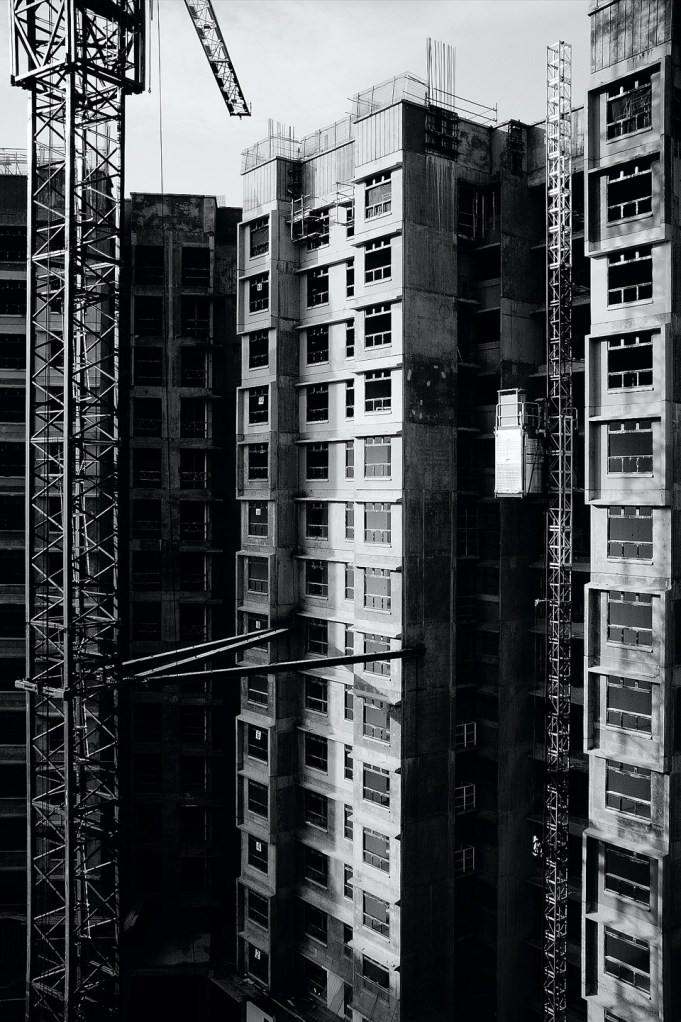
I usually take photos using a digital camera (Fuji x100) in raw mode and process the images in colour. I love having colours in my pictures and how they enliven each image.
With photography, there are many details that I want to record and show of each moment. Which is why I sometimes struggle when working with black and white as I feel like I’m taking something away from the pictures.
But am I?
One thing that struck me over the weekend was that by stripping away the colours, I was adding more to these images. With the photos in black and white, albeit the many shades in between, there were less distractions vying for my attention. The mood of each image immediately became more prominent.

Yesterday, I watched a short video on Daido Moriyama. Produced by Tate, the documentary captures Moriyama’s approach to street photography.
It was interesting to see that he shoots using a compact digital camera. What piqued my curiosity was that he would take photos in colour, review them as they are on the computer before deciding which ones to process in black and white.
During the Magnum photography workshop in Heidelberg, Chien-Chi said that you look at things differently when you shoot in colour versus when photographing in black and white. I tend to agree with him.
But now I’m not so sure after seeing Moriyama’s workflow in the video. Does he see the world in colour or monochrome when photographing?
In the video, he said, “The reason why I think black and white photography is erotic is completely due to my body’s instinctive response. Monochrome has stronger elements of abstraction or symbolism. There’s perhaps an element of taking you to another place. Black and white has that physical effect on me, that’s just the way I respond to things. Colour is something more vulgar. Because the colour is making the decisions, it feels vulgar and that seems to me to be the difference.”

Decades ago, most people shot in black and white because that was all they had if they wanted to take photos. When colour photography reached the masses, monochrome photography took a backseat. Black and white photography was, and still is, regarded as the chosen format for serious photographers or artists.
I don’t buy such generalisations or stereotypes.
I think great photos can be made regardless of whether one is using a toy camera (e.g. Lomo LC-A) or mechanically superior one (e.g. any Leica). Doesn’t matter whether you shooting on film or with a digital camera. Neither whether it is in colour or black and white.
What matters is what you – be it as the photographer or the viewer – take away from it. As Moriyama expressed in the same video, “I think that the most important thing that photography can do is to relate both the photographer and the viewer’s memories.”

For instance: The photo above is of my parents with one of my nieces. My mum was chatting with my aunt to whom we paid an impromptu visit after lunch. My dad was happily snacking away while the little girl was holding onto his hand. This image is precious to me and makes me smile every time.
Some people, including Moriyama, consider monochrome photos to have “stronger elements of abstraction or symbolism” than images in colour. I can see why this might be so as colours would provide additional information in an image.
In black and white, there’s more room for ambiguity and re-interpretation, contrary to the popular expression of “black and white”!
While I don’t take abstract photos, I thought this photo might suffice to show the possibility for ambiguity.
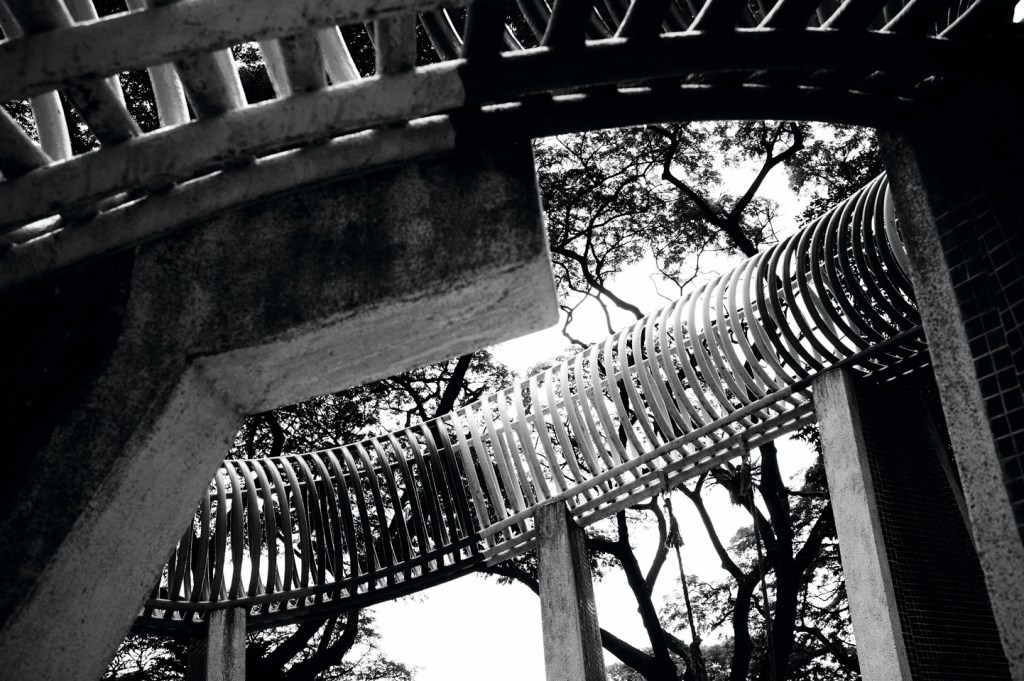
Though most Singaporeans, as well as anyone who has spent enough time in Singapore in the 1980s and 1990s, would recognise this in a blink! For comparison, click here for some photos of the same spot in colour.
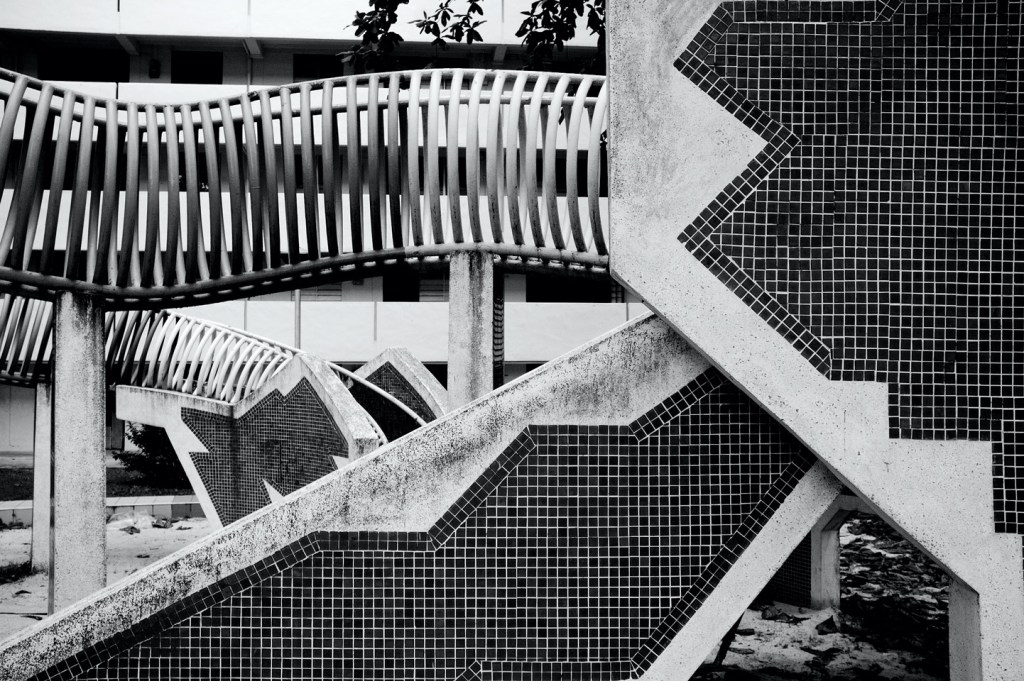
As mentioned earlier, I find that there are less distractions in a monochrome image than a coloured one. In a way, rendering a picture in black and white acts as a “clutter filter”.
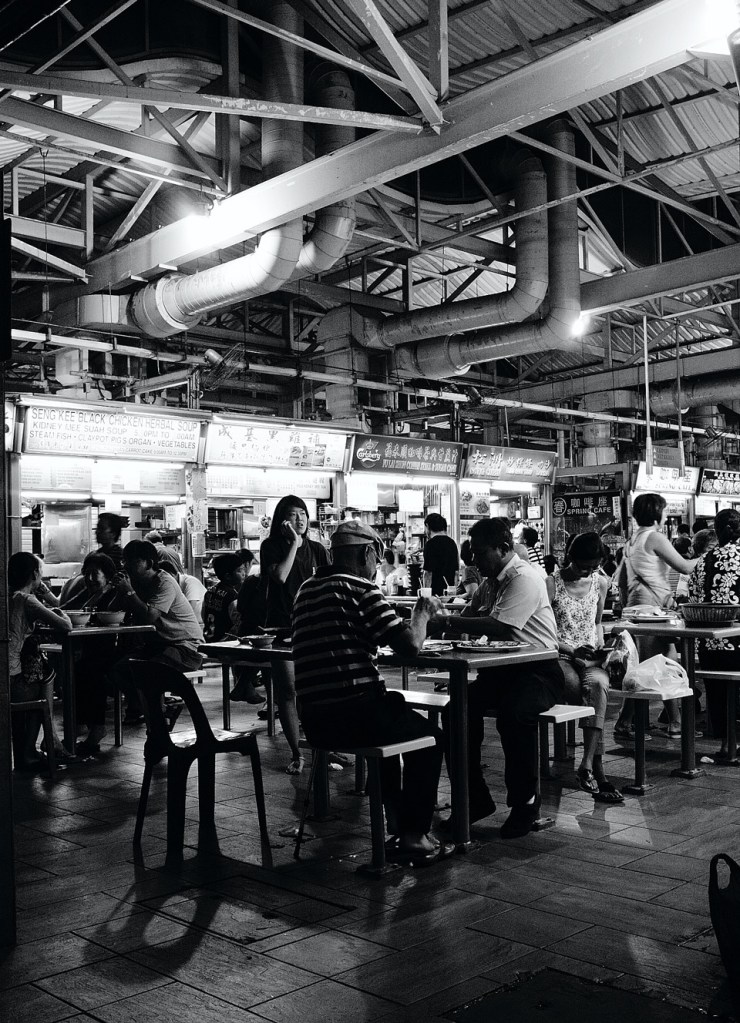
The following images – the first taken at a hawker centre, the latter at the fabulous Morton’s bar – are rich in colours and action. I bounced back and forth between monochrome and colour as each portrayed a distinct atmosphere.
For comparison, here’s showing two versions of the picture taken at the hawker centre:
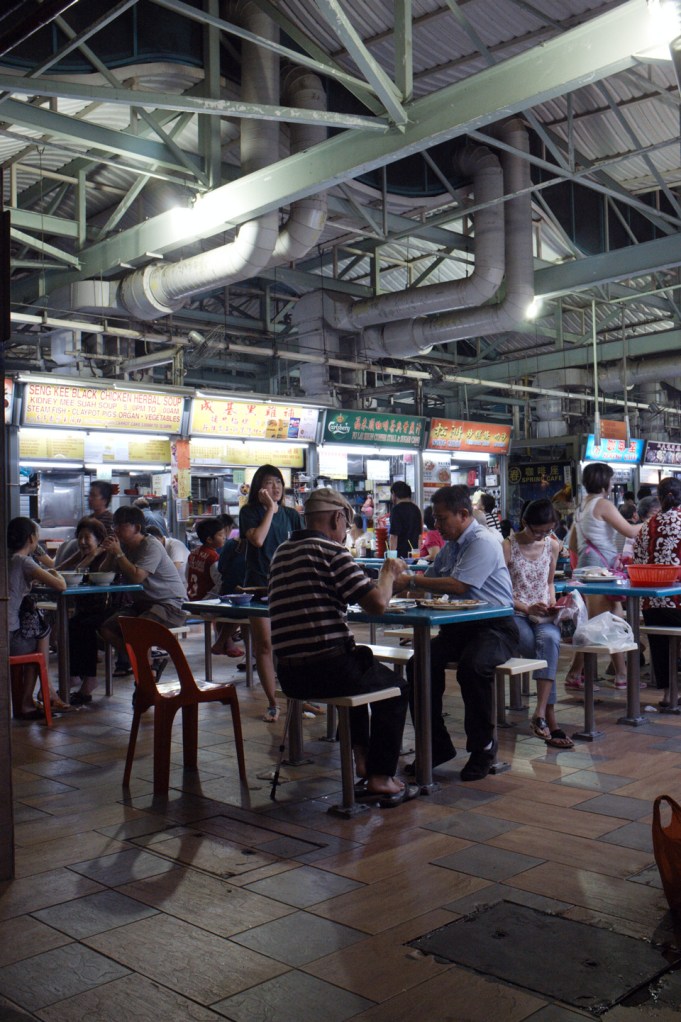
Do you have a preference between the two?
I prefer the monochrome image. I like how the overhead metal roof structure pops out against the busy dinner crowd beneath, a clear juxtaposition of structure against disorder (just a little; Singapore is very organised).
With the photo of Morton’s bar, the black and white image was also a clear winner. While I like the look of the warm light passing through the coloured bottles, I find the forms of the bottles more attractive.
When in monochrome, the elegant lines of the bottles stand out against the the passing blur of a bartender in the background.

By the way, Morton’s bar offers complimentary mini steak filet sandwiches during their “Mortini Night” happy hours (Monday-Saturday, 1700-1900) and serves delicious martinis. Not to be missed if you are in the vicinity of Mandarin Oriental Singapore!

What’s my conclusion?
I think that monochrome and coloured photos provide distinct views of the world and what we experience.
Sometimes, black and white just works better than colour, and vice-versa. Perhaps one day, a picture that you so loved in monochrome would appear more striking or impressive in full colour, and vice-versa.
Photography is both a means of communication and personal expression. At the end of the day, what matters is how the photo makes you feel, how you relate to it and the memories that it evokes.
Doesn’t really matter whether it is in colour or in black and white, don’t you think?
 Angelina Hue
Leave a reply to dehk Cancel reply