
A flash of hot pink caught my attention when I was in Paris last month. The words “Paris, Texas” and “version restaurée” were printed beneath the uncertain face of a beautiful blonde. In a corner of the poster was the Palme d’Or logo of the Cannes Film Festival.

Back in AB’s apartment, I told him about this movie poster, as well as that for a few other restored award-winning films such as Jacques Tati’s Playtime – in the metro station. We eventually found out that these were part of the Cannes Classics series, for which a selection of cinematic masterpieces from past decades have been digitally restored and presented on the big screen once again.
One month later, we were back in Paris together to watch “Paris, Texas“. Awarded the Palme d’Or in 1984, the film was directed by Wim Wenders and starred Harry Dean Stanton and Nastassja Kinski – all of whom I had not heard previously. I had no idea what to expect when we entered the cinema.
What a terrific surprise it turned out to be! I was enthralled from the moment the film started with wide shots of the barren Texas desert as Stanton’s character, Travis stumbled through in a cap, suit and tie.
“Paris, Texas” was 147 minutes long and had me in suspense throughout as pieces of the puzzle surrounding Travis’ four-year disappearance gradually came together. But not without unexpected surprises in the plot.
The acting by Stanton and Kinski, as well as that of Hunter Carson who played the child of the two, was brilliant. As was the soundtrack by Ry Cooder, who AB mentioned – several times (he was notably impressed by this detail) – had produced the Buena Vista Social Club album.
I’m not going to say anything more about this film other than to encourage you to watch it!
By the way, we saw “Paris, Texas” at Louxor cinema, which reopened last year after being closed for more than 20 years.
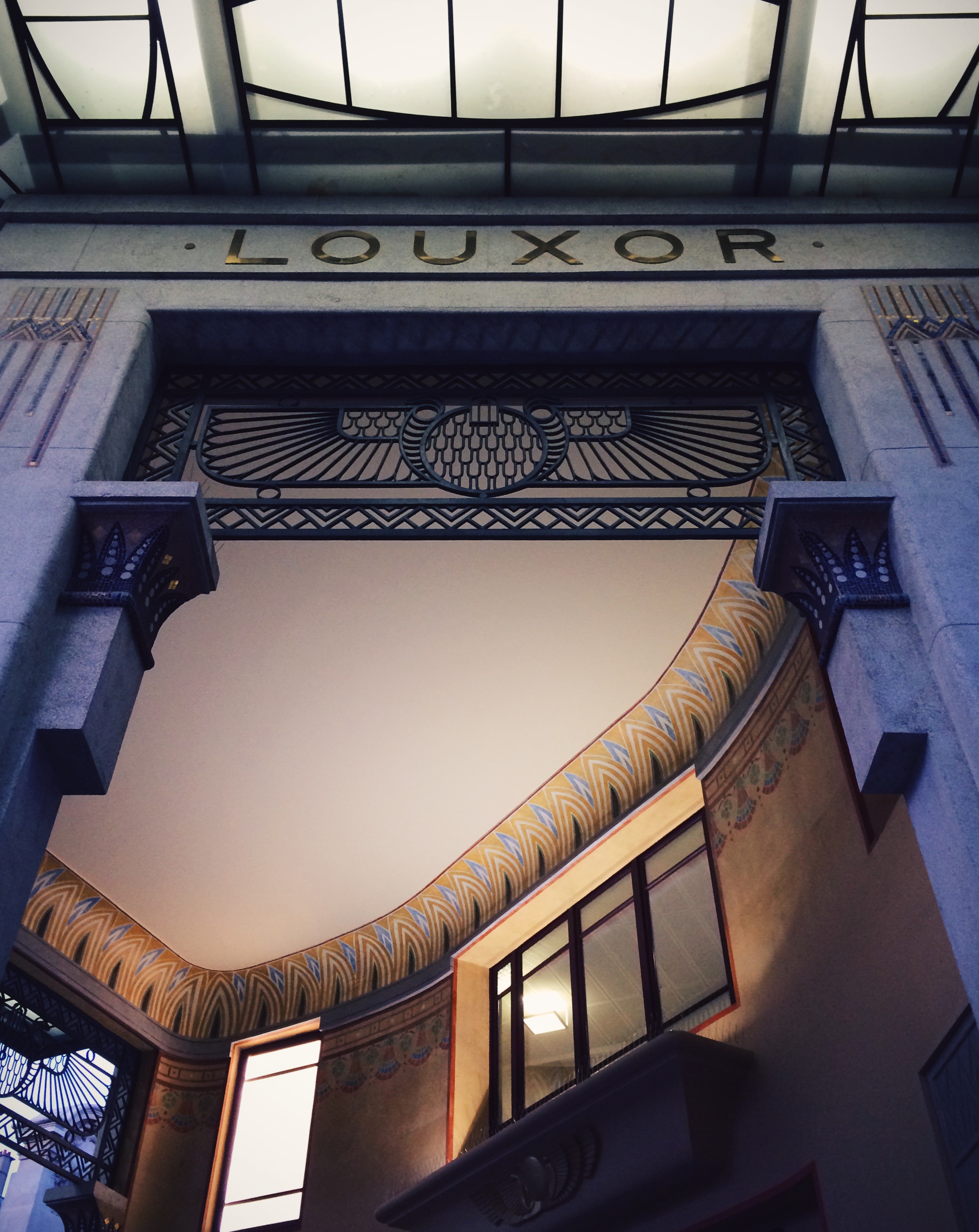
Located in the 10th arrondissement, in the north of Paris, Louxor first opened its doors in 1921. The cinema was designed by Henri Zipcy and features an impressive neo-Egyptian architecture and elegant mosaic artwork.
In 1983, the building was sold to the Tati group – which I associate with cheap and low-quality clothes. The new owner turned Louxor into a nightclub: Renamed as “Megatown”, this became the largest gay discotheque in the City of Light.
Megatown closed in 1988 and the historic building, which was classified as a listed monument in 1981, was left abandoned. Fortunately, it was brought back to life following a major two-year renovation, allowing us to enjoy art house films within its glorious interiors!
Before I end this post, here’s a photo that I took in Paris – inspired by Paris, Texas.

 Angelina Hue
Leave a reply to Lia in Brussels Cancel reply