A year ago, we were in Yogyakarta to explore its ancient temples and the art of wayang kulit. The latter was unfortunately inaccessible as the museum only offers the live shadow puppetry performances during the peak tourist season. However, we got to experience what it is like to be a celebrity and learned to navigate our way out of a scam!
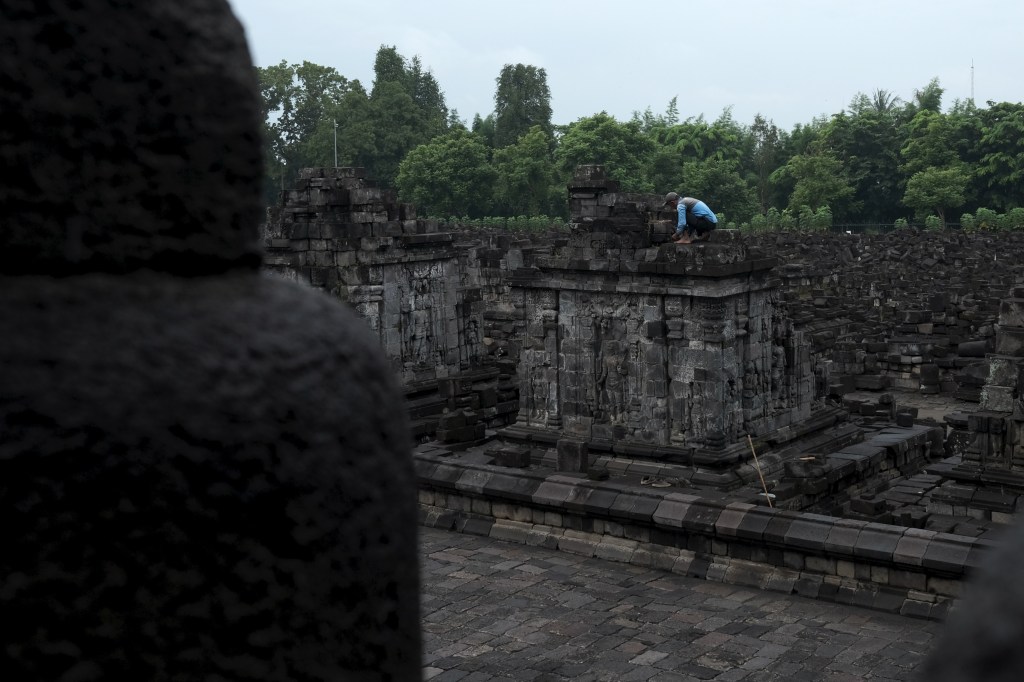
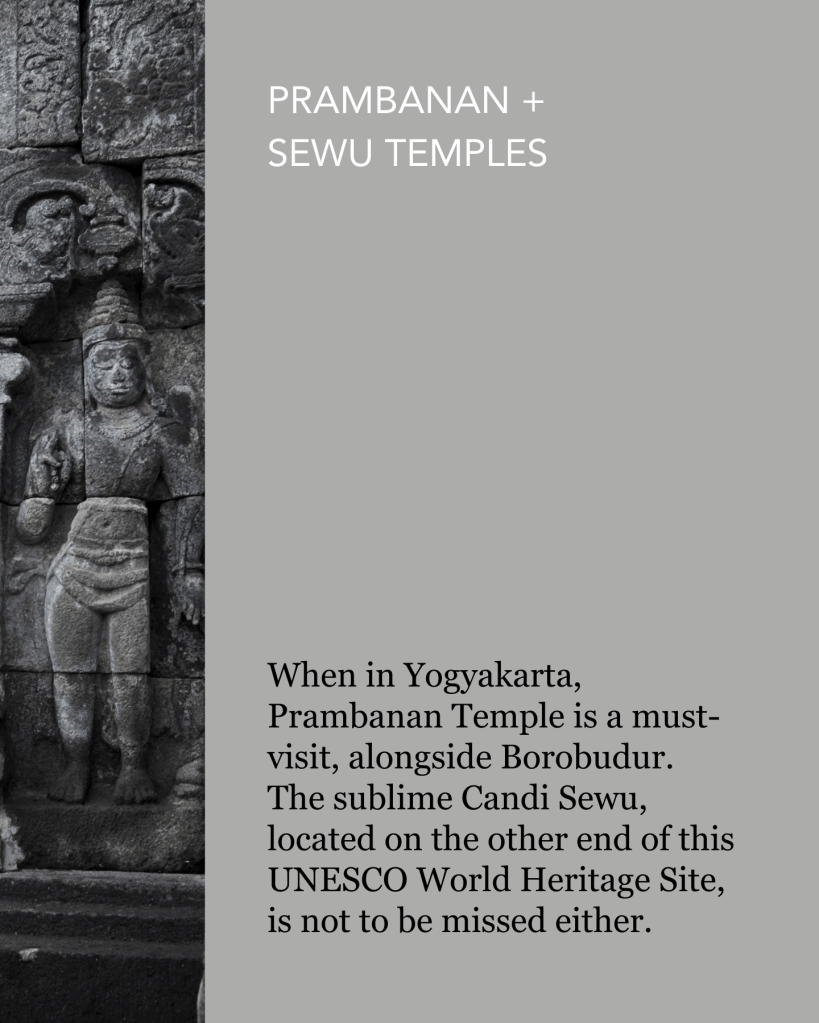
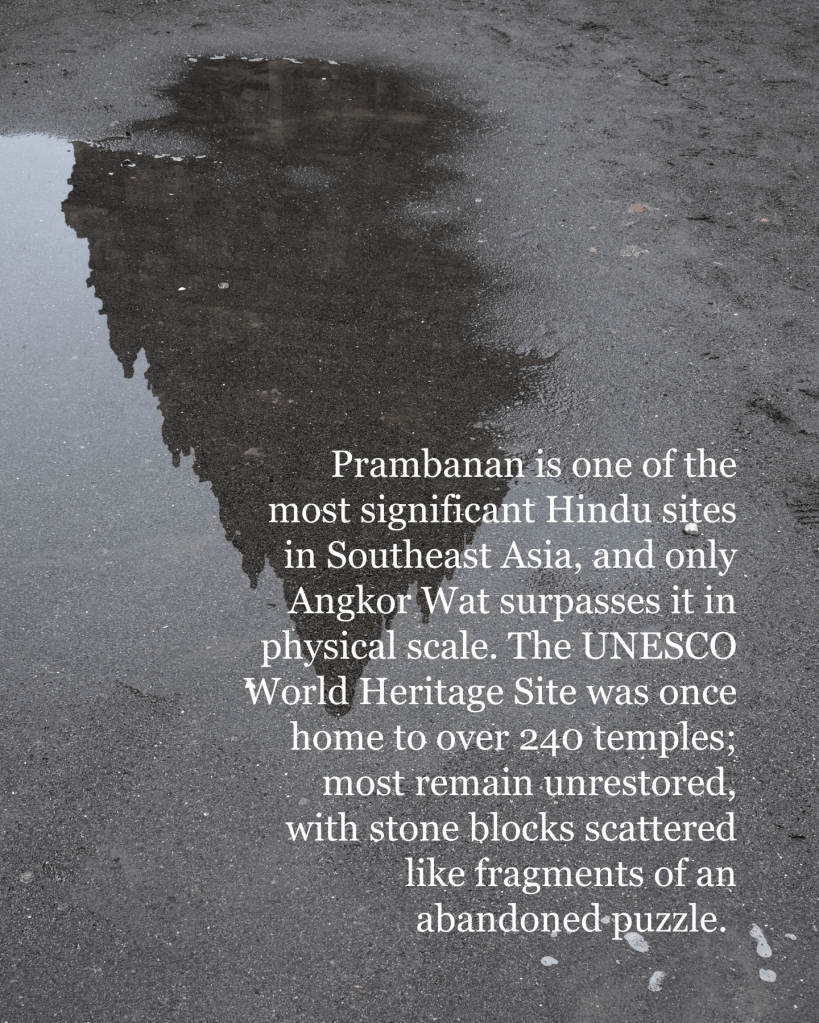
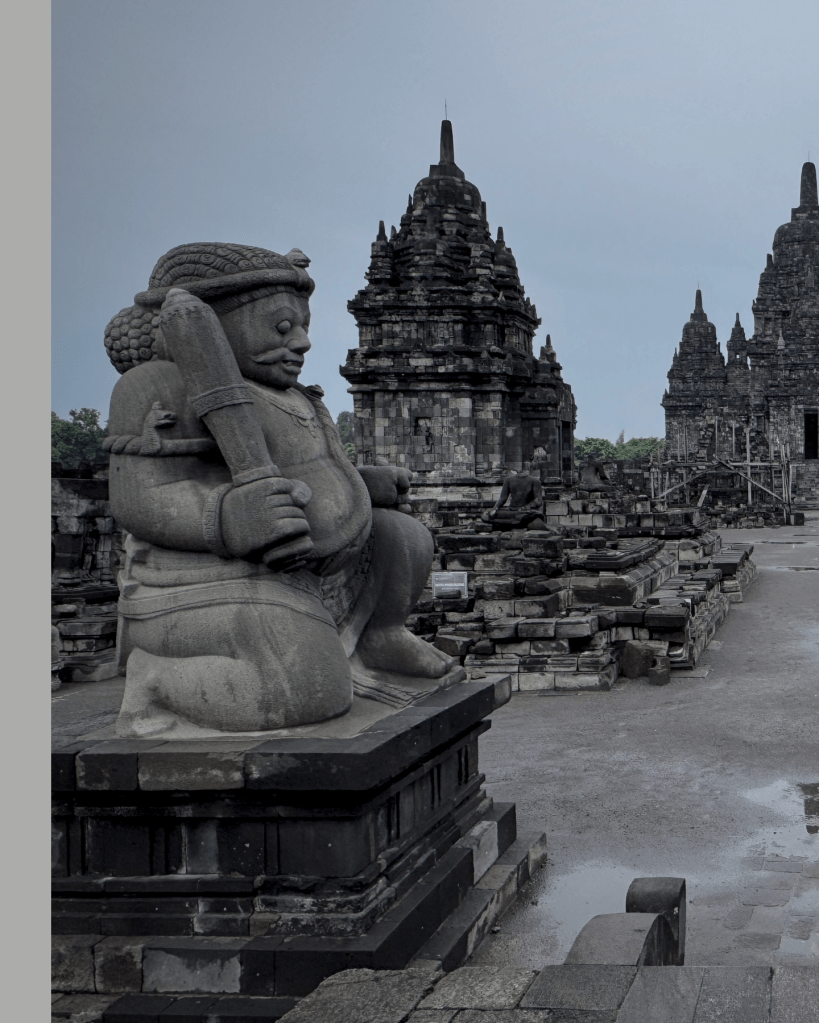
Many people think of Borobudur, the world’s largest Buddhist temple, when Yogyakarta comes to mind. In contrast, Prambanan often plays second fiddle. Yet, it is one of the most significant Hindu sites in Southeast Asia, and only Angkor Wat surpasses it in physical scale. Unlike Borobudur, which has benefitted from consistent restoration efforts over recent centuries, Prambanan has faced a different fate. It has suffered significant destruction due to earthquakes and looting. Once home to over 240 temples, most remain unrestored, with stone blocks scattered like fragments of an abandoned puzzle. Nevertheless, Pramabanan has been recognised as a UNESCO World Heritage Site since 1991, a testament to its cultural importance.
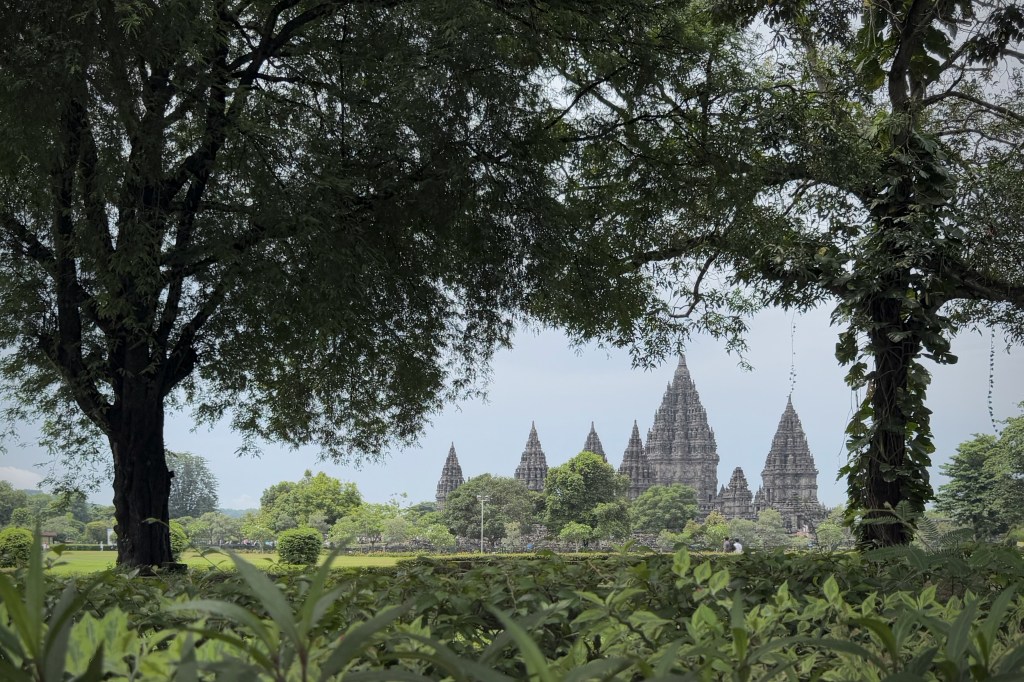
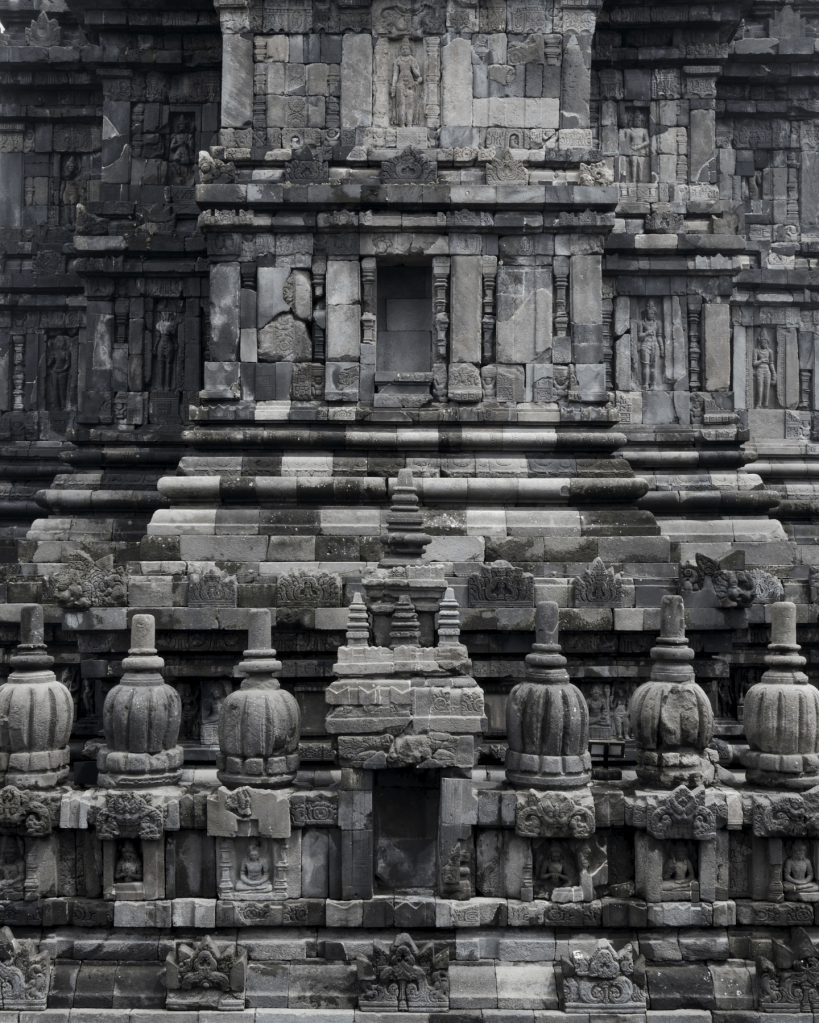
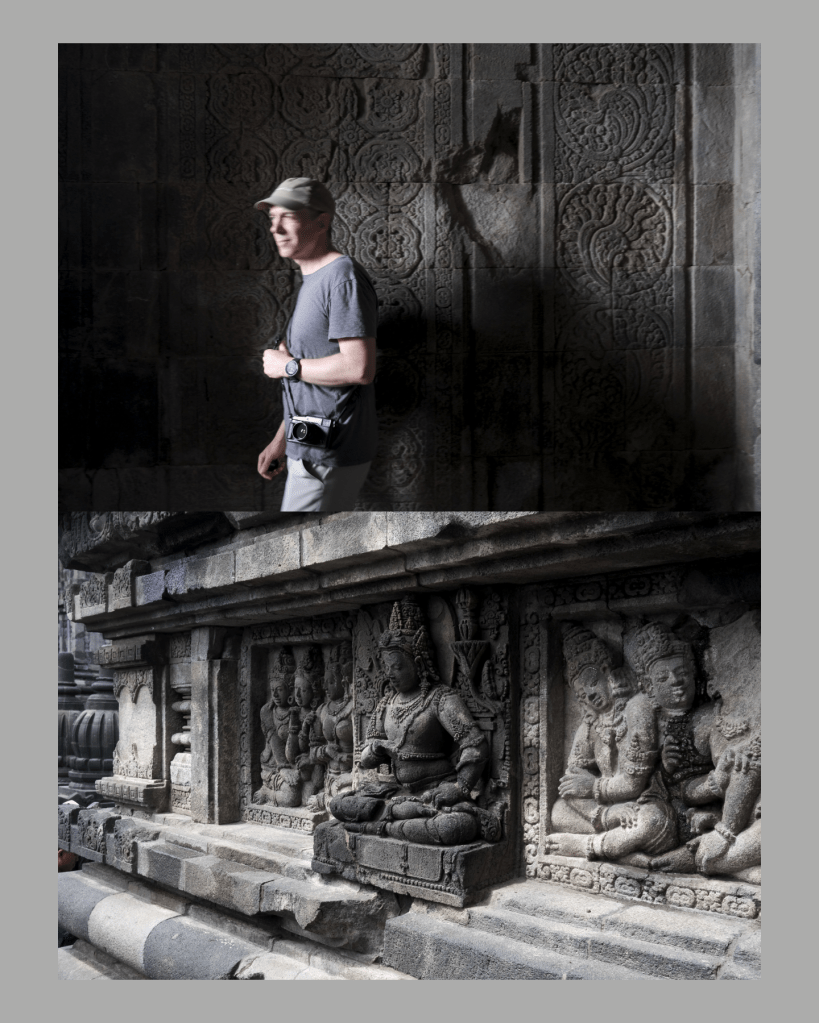
Built in the 10th century, this is the largest Hindu temple site in Indonesia. At its heart lie three temples dedicated to Shiva, Vishnu, and Brama, decorated with reliefs depicting the Ramayana epic. Many visitors come for the Javanese dance performance of the Ramayana during summer evenings, with the Prambanan complex serving as the backdrop. It felt too touristy for our tastes, so we passed on this theatrical act.
To minimise travel time and avoid waking at ungodly hours, we had stayed overnight in a nearby village guesthouse. The couple who ran it were hospitable and warm, and our meals were of generous portions. The main gripe – one you can expect in an Indonesian village – was the blaring calls to prayers before dawn. We were jolted awake when the nearby mosque blast its amplified call into the homestay’s courtyard at 0340. It was hard to return to sleep as another call to prayer resonated through the compound an hour later.
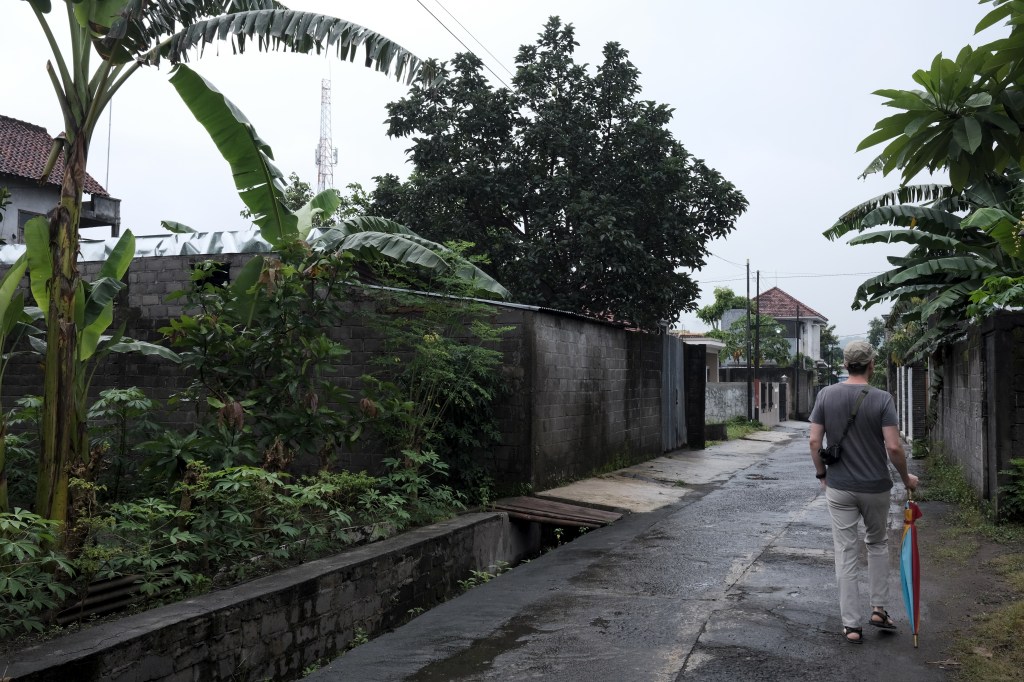
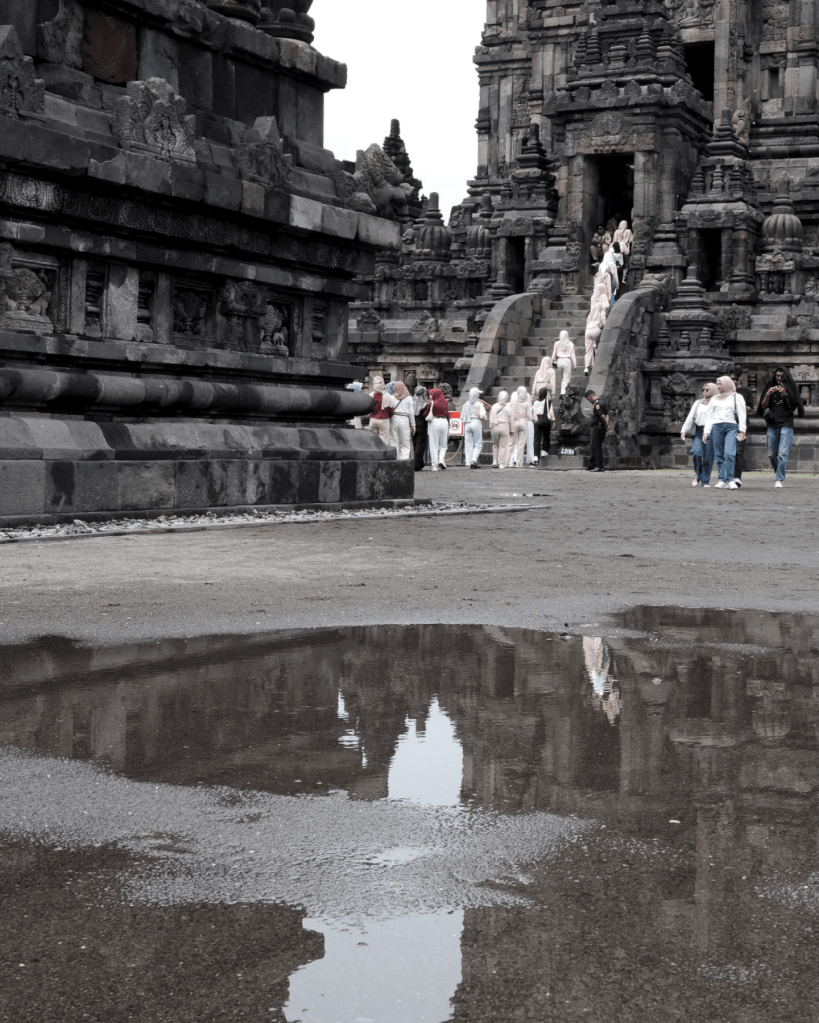
After a leisurely breakfast, we walked from our guesthouse to the temple. We arrived at 0830, just an hour after the gates opened, and there were already more than 10 buses in the parking area. Most visitors were students from around Java on an excursion. As we approached, we spotted uniformly dressed groups streaming up the steps to Prambanan.
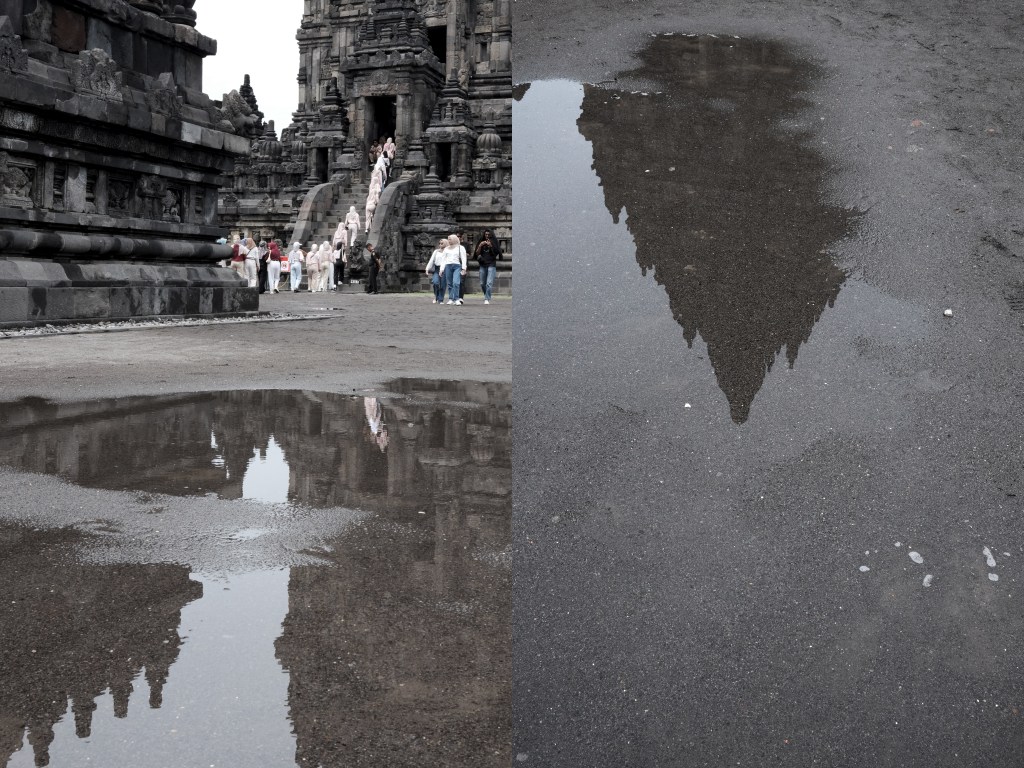
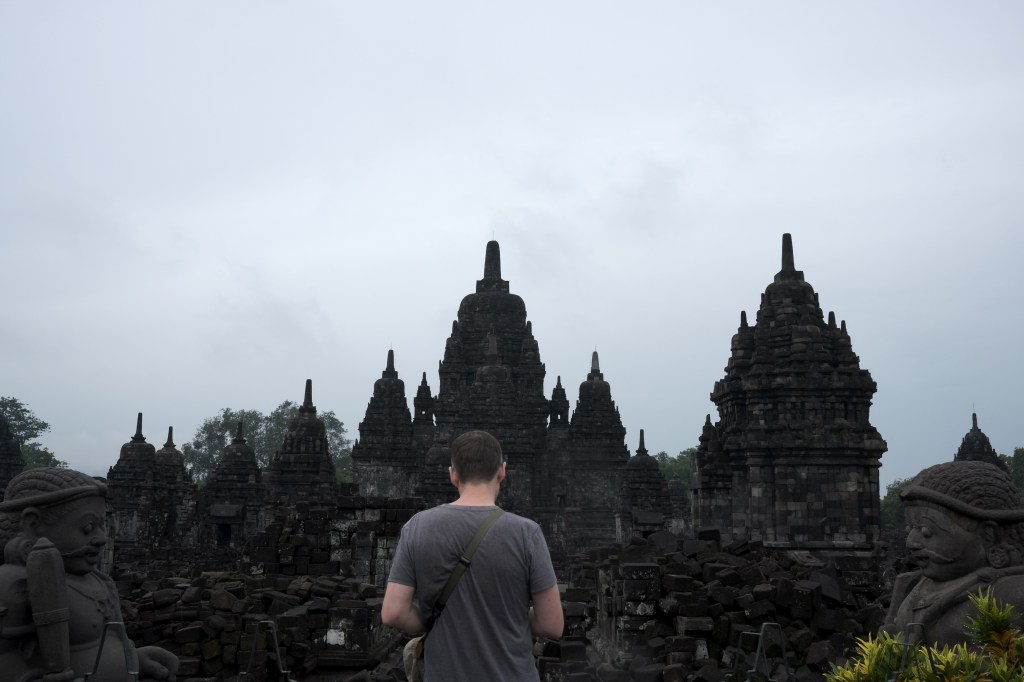
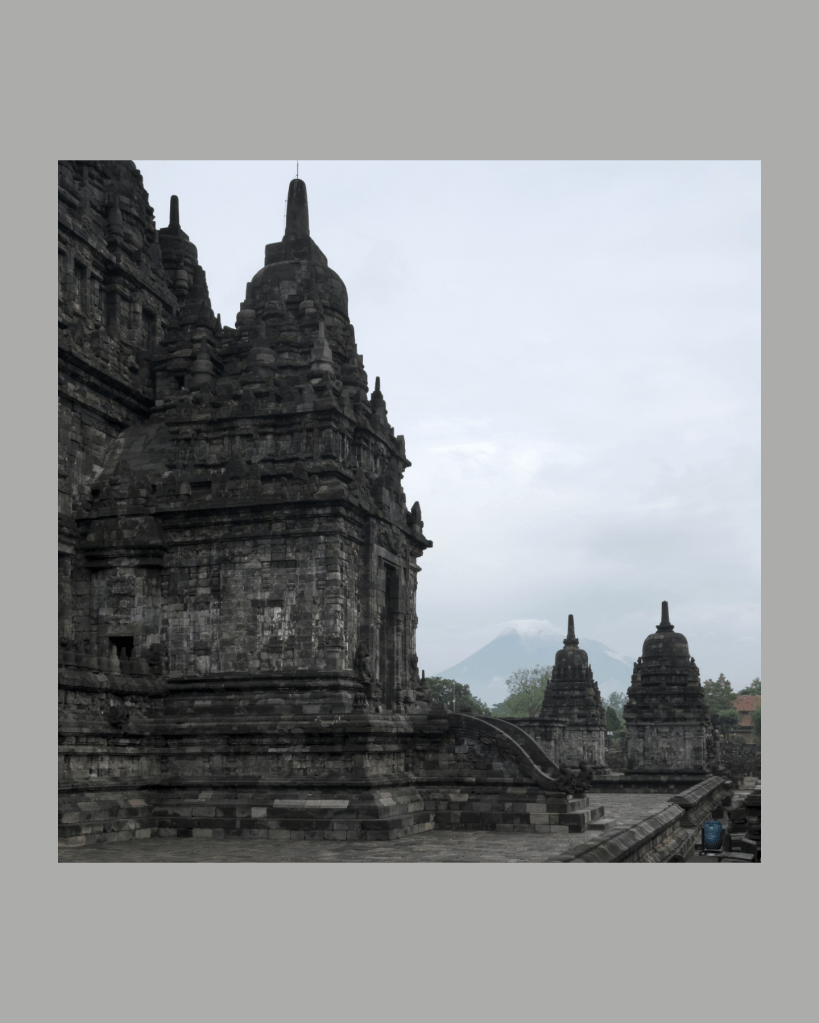
We stuck to our plan and made a beeline for Candi Sewu, the furthest temple from the entrance and about 15-20 minute walk away, to bypass the growing crowd at Prambanan Temple (also known as Loro Jonggrang).
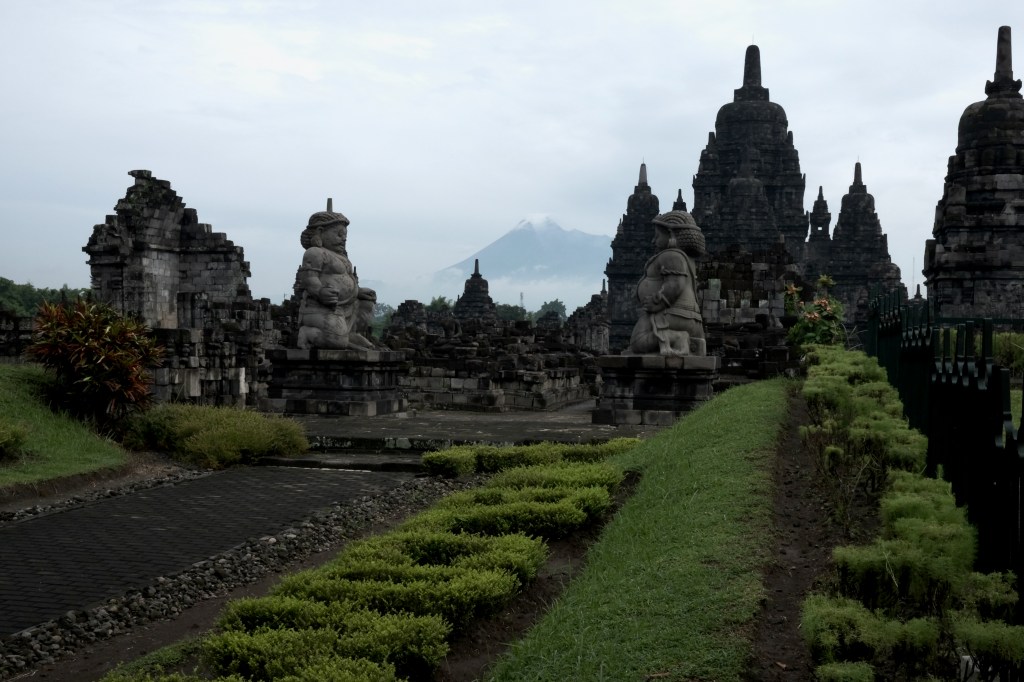
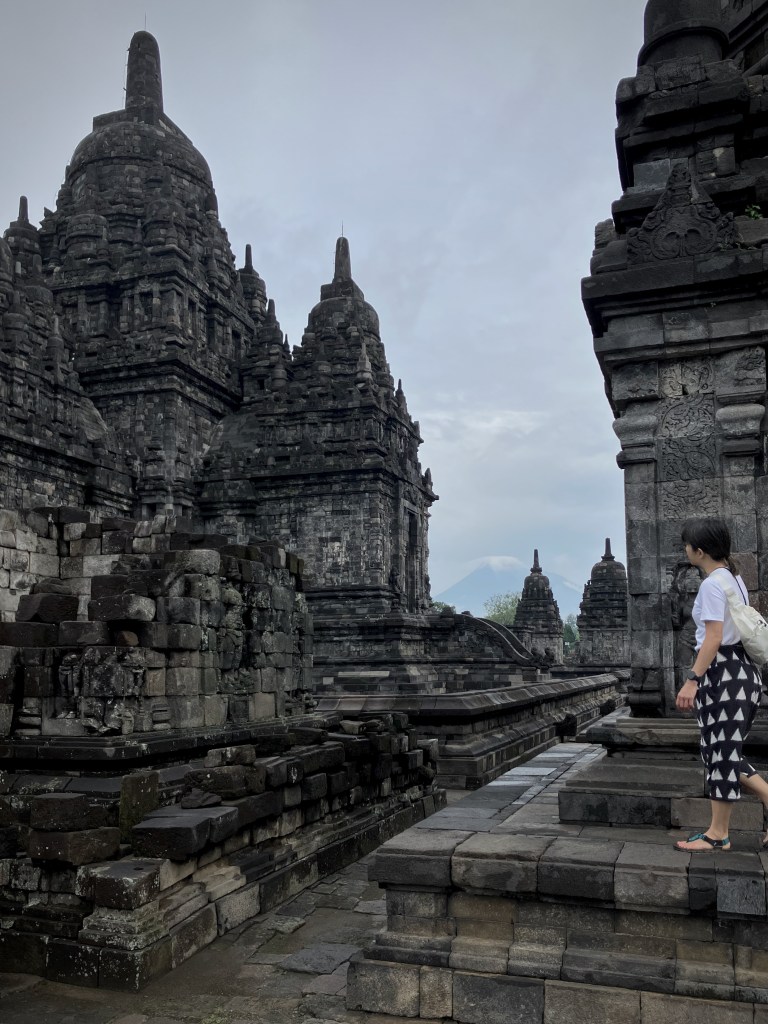
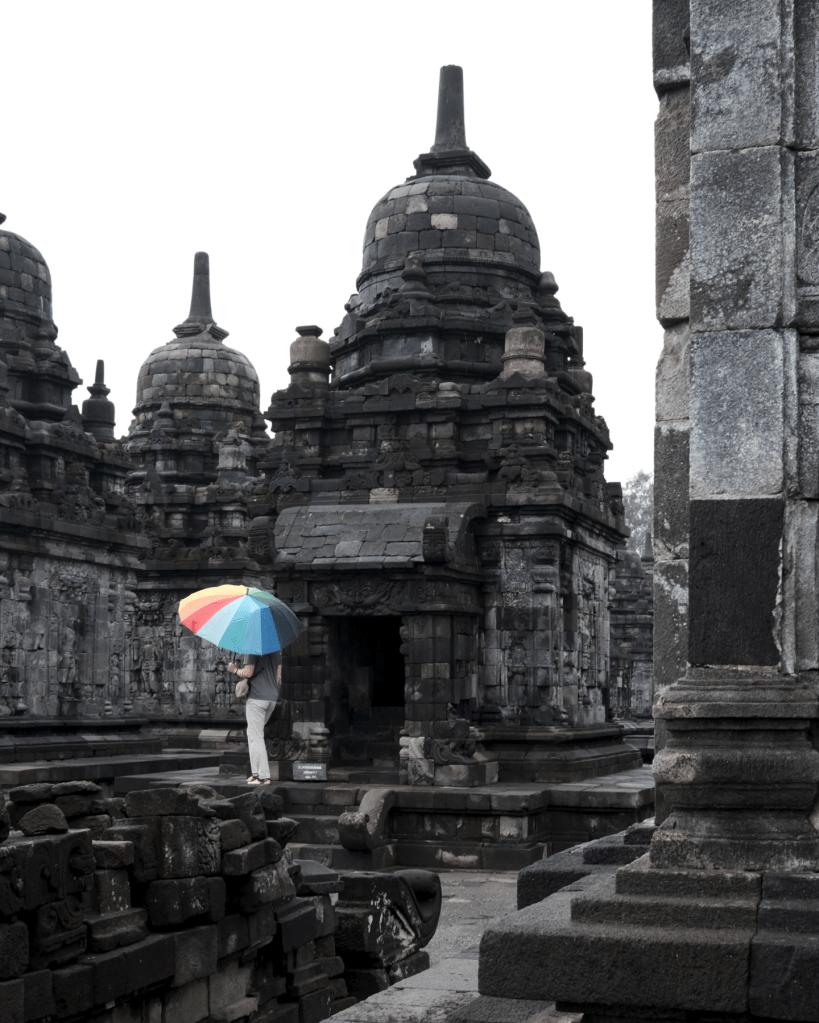
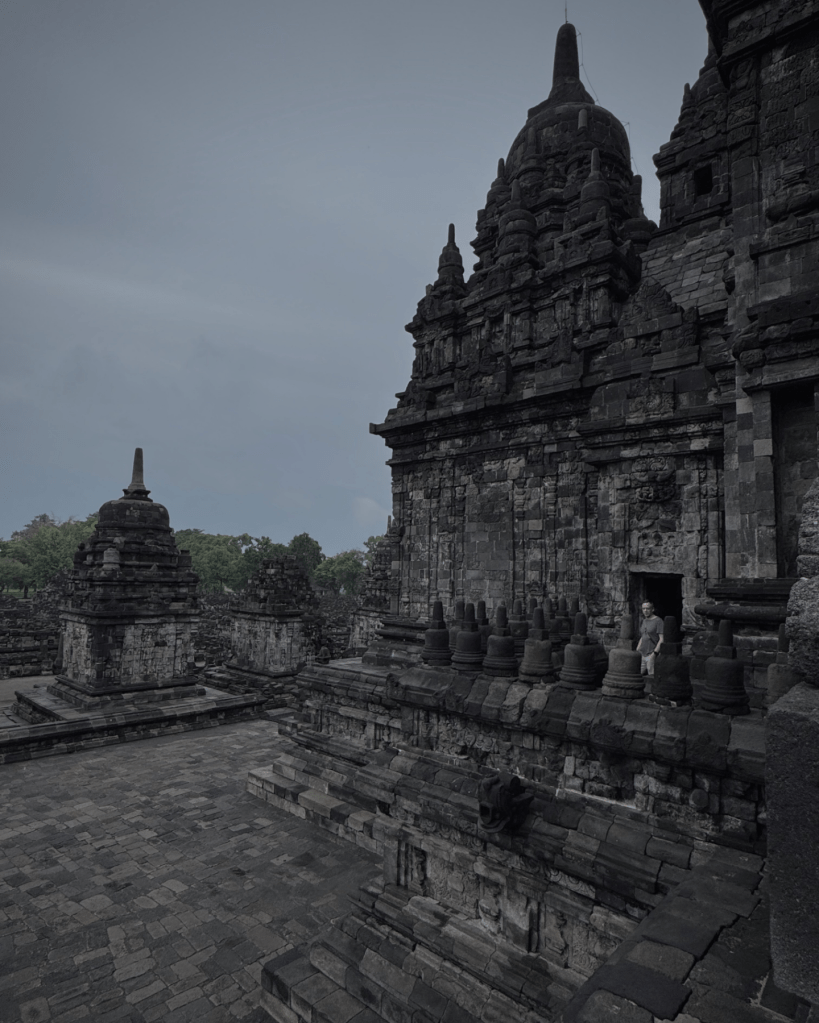
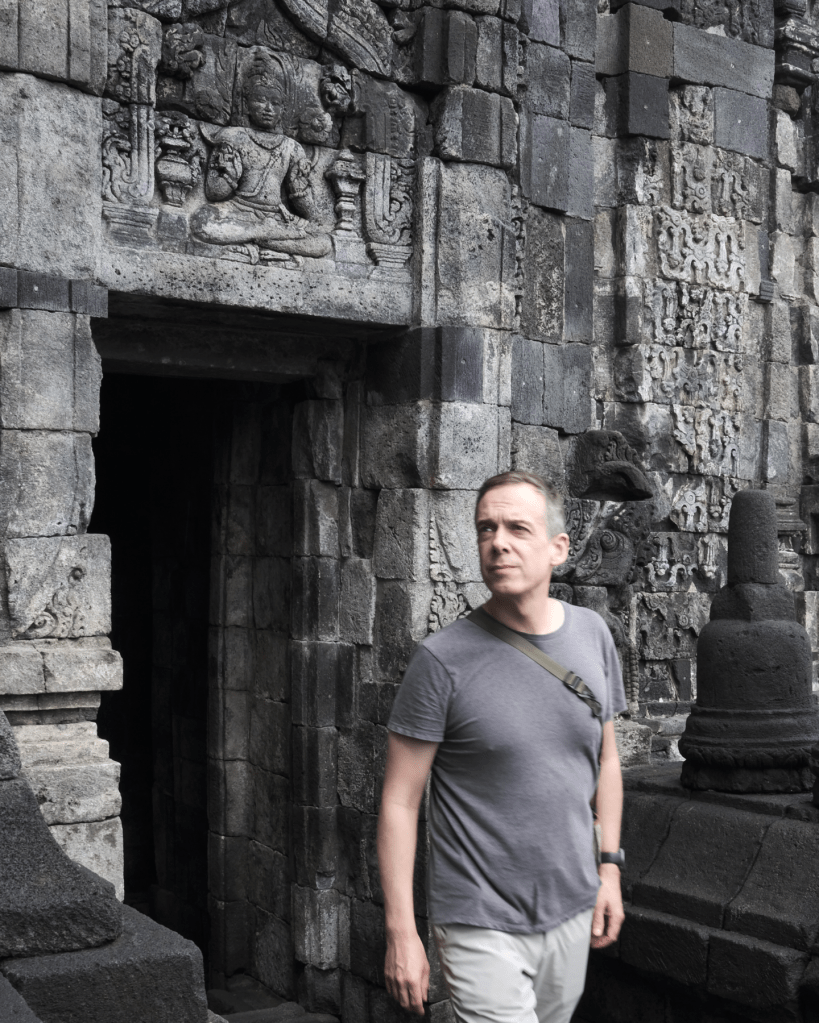
Going against the tourist tide proved to be a wise move. There was no one at Sewu temple. We took our time to explore as the drizzle began to fall, creating a sublime atmosphere. I loved the individual balconies extending from the central temple’s cavity, which I circled multiple times. The structure was surrounded by huge clusters of incomplete and crumbled shrines.
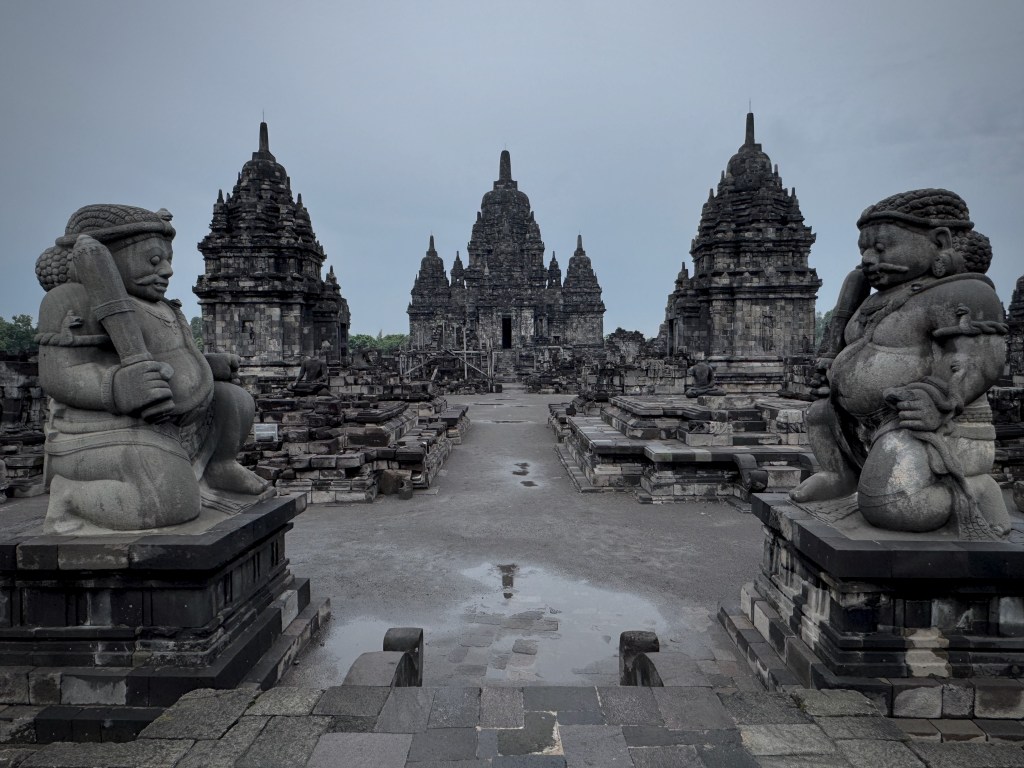
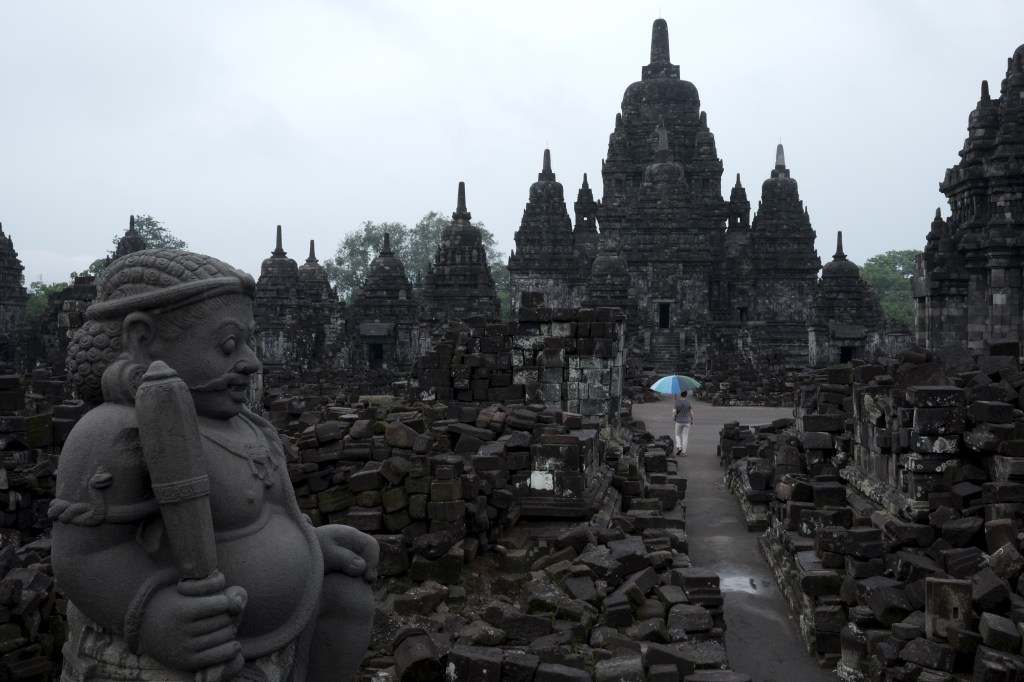

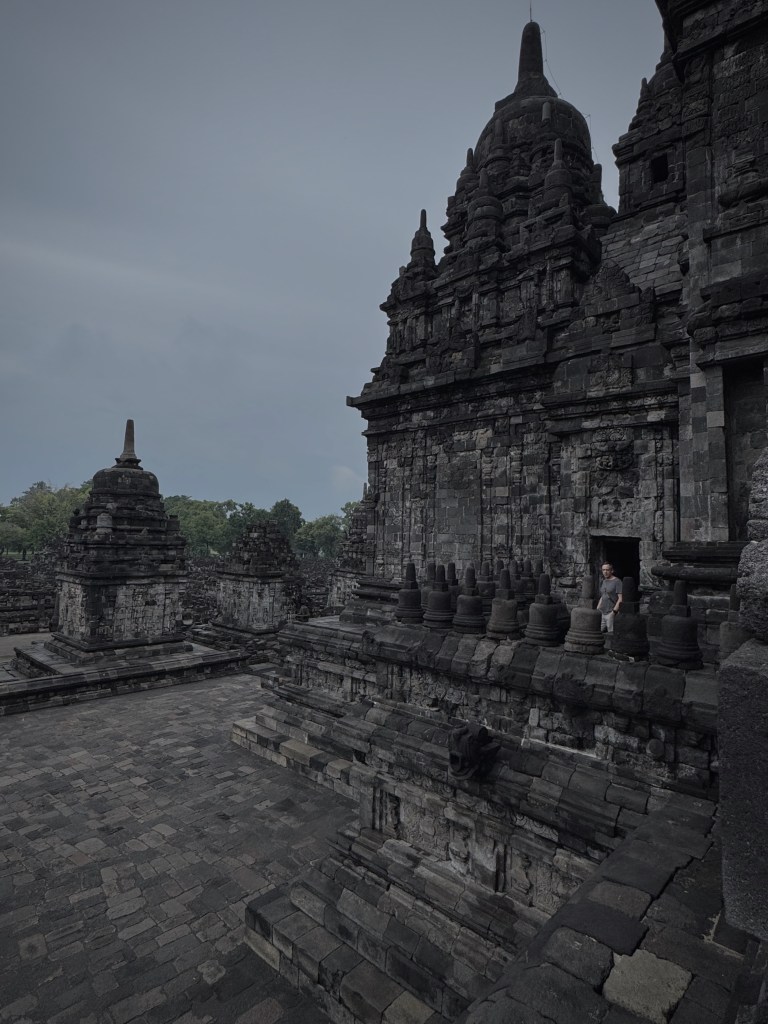
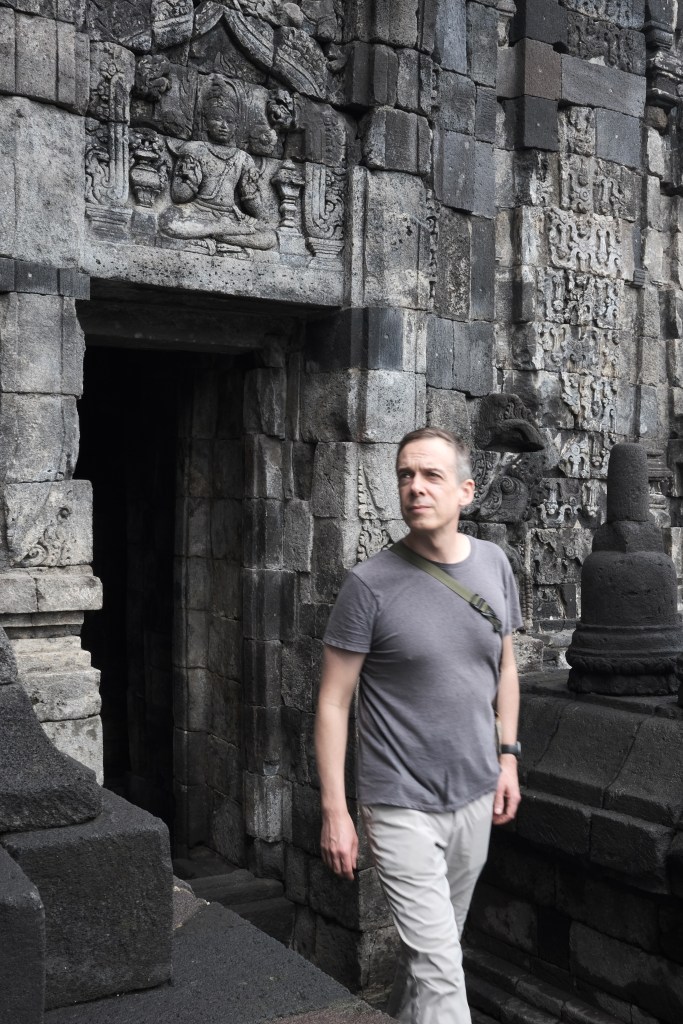
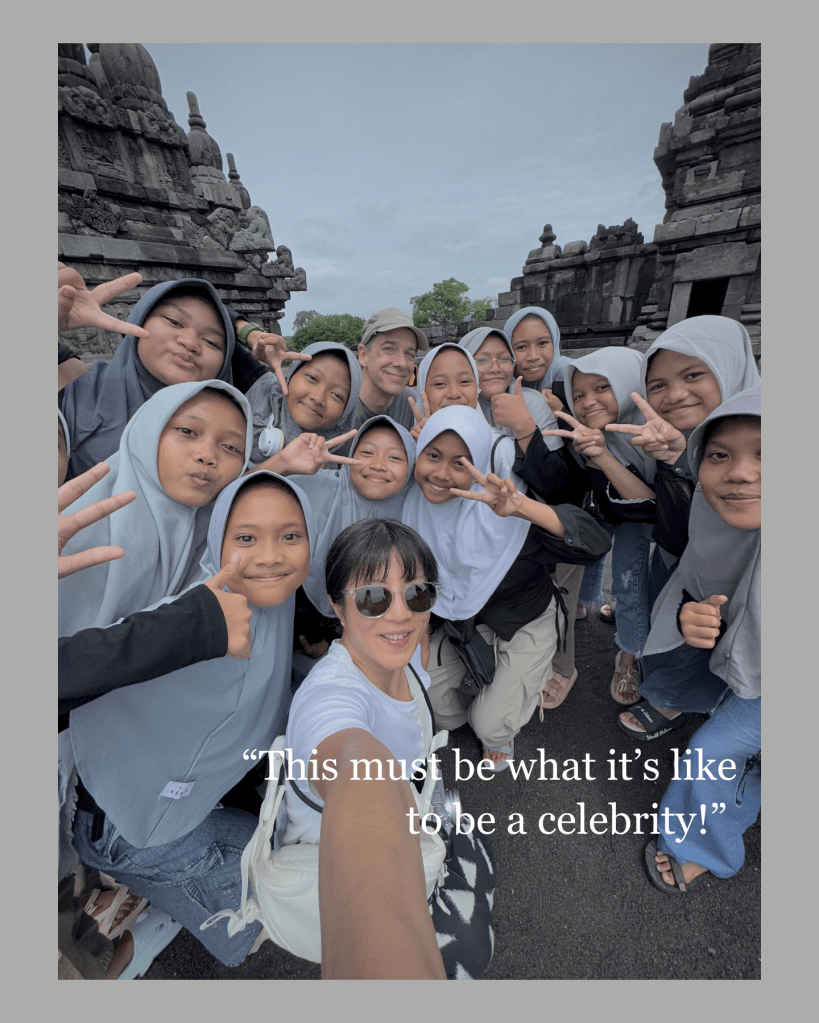
We eventually made our way south to Prambanan itself. Almost immediately, AB caught the attention of a group of schoolchildren who shyly asked to take pictures with him. Unlike our experience at Borobudur, which had a more international crowd, Pramabanan seemed to be mostly visited by Indonesian students, plus the occasional couple taking wedding photos.
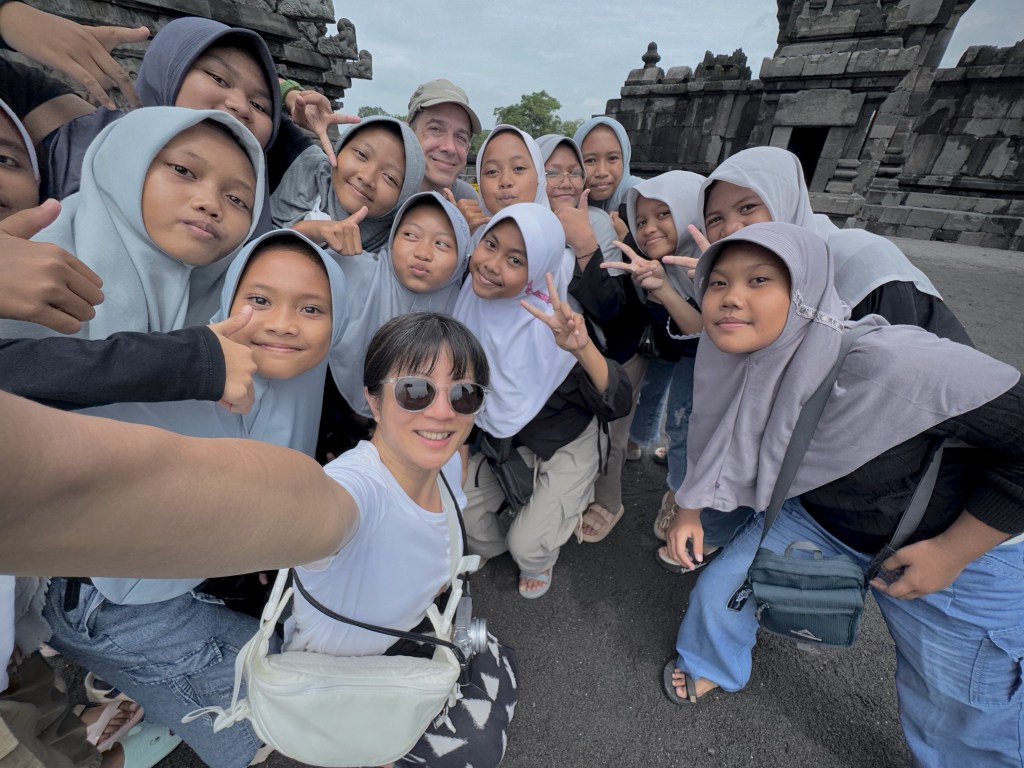
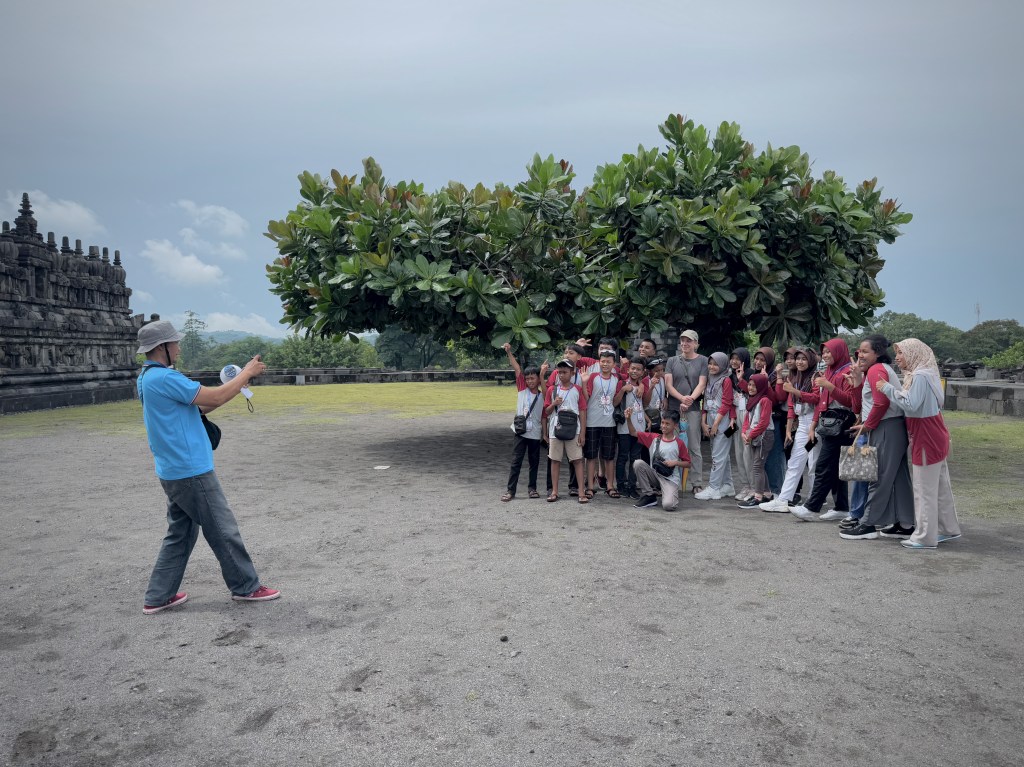
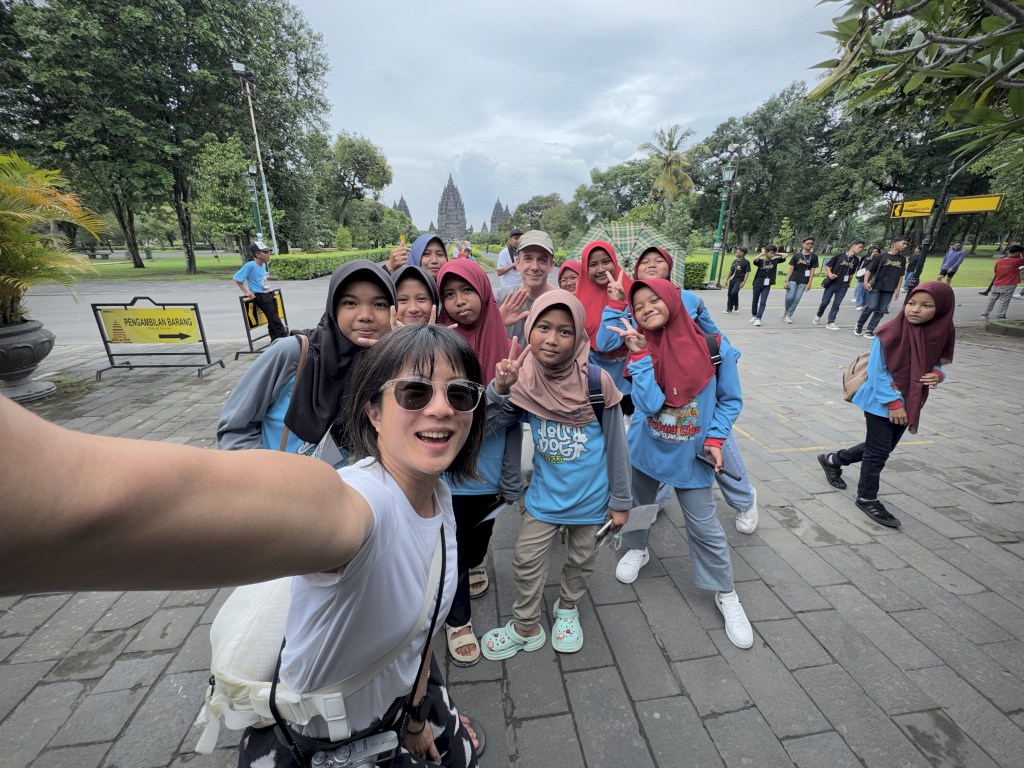
The children and teenagers were excited to see him and the few other tourists of European descent. The younger ones approached us for group photos, while the older students peppered us with questions as part of their English assignments. Initially, it was quite amusing, but as the sun bore down on us, the novelty began to wear off by the sixth or seventh group. AB commented several times, “This must be what it’s like to be a celebrity!”

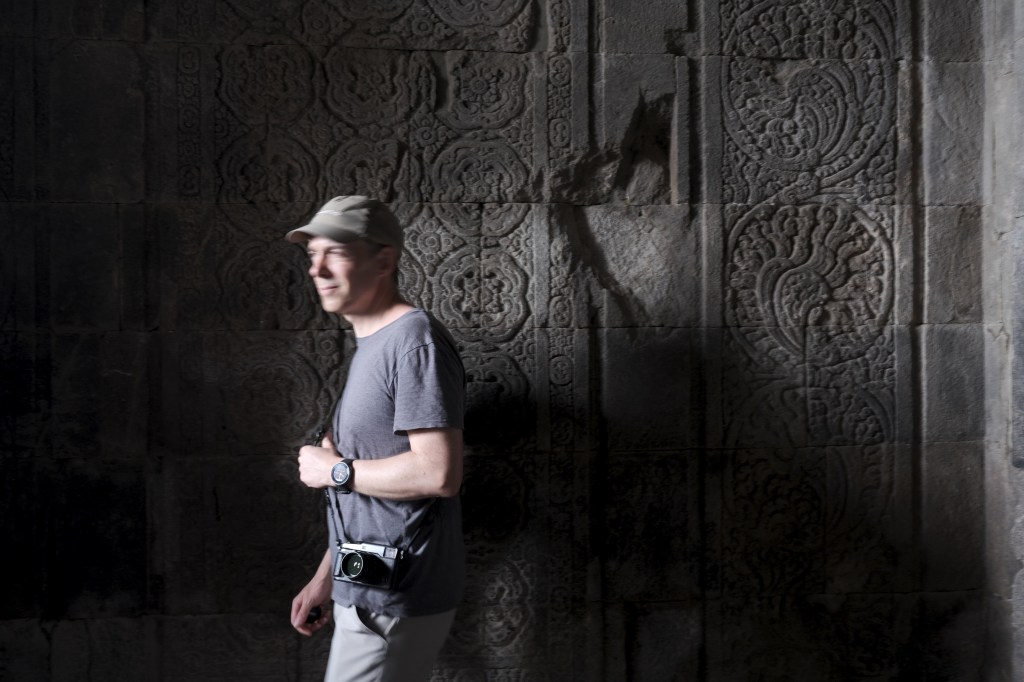
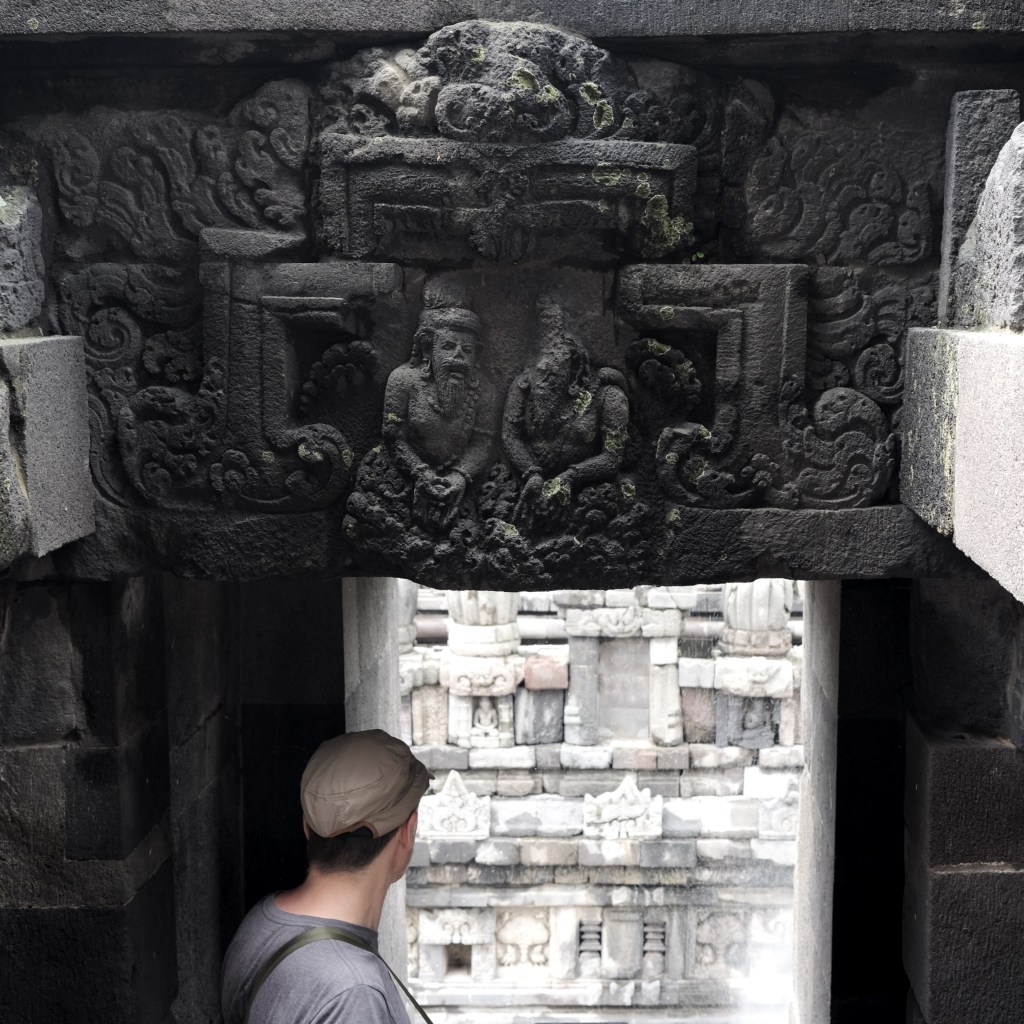
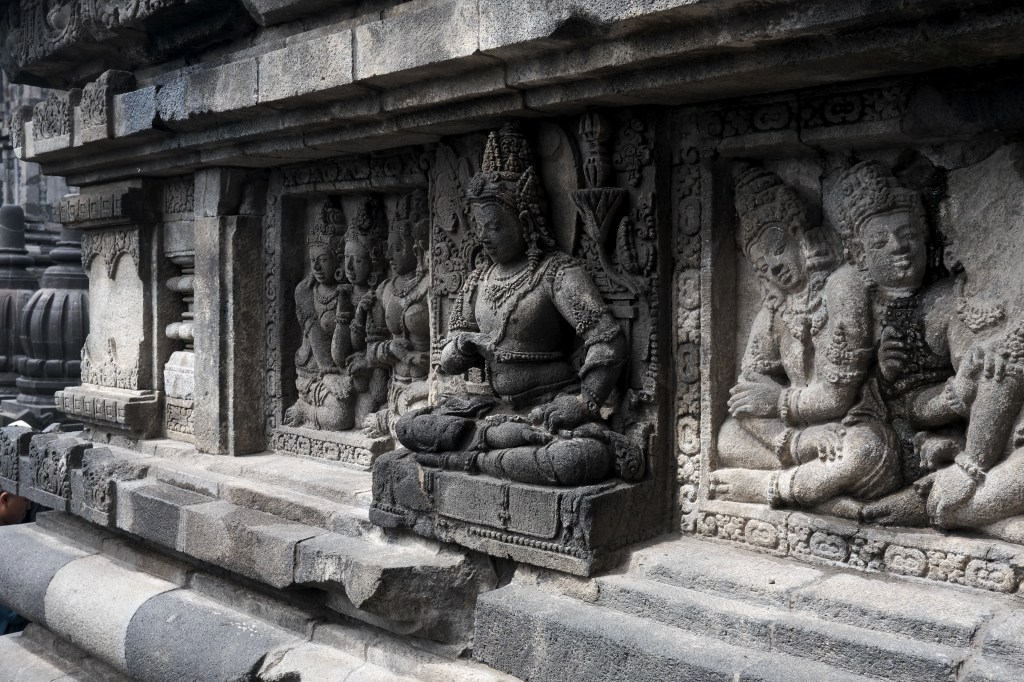
Am grateful for this chance to experience this profound piece of history, and I strongly recommend including Pramabanan in your itinerary when visiting Yogyakarta!
Tips
1. Take your time: While visits to Borobudur are limited to a one-hour window as part of a series of interventions to protect the site, you can stay as long as you wish within the opening hours of the Pramabanan complex. Which is great for visitors to explore the details, and you can stop for a coffee or tea break in one of shaded cafes within the temple grounds.
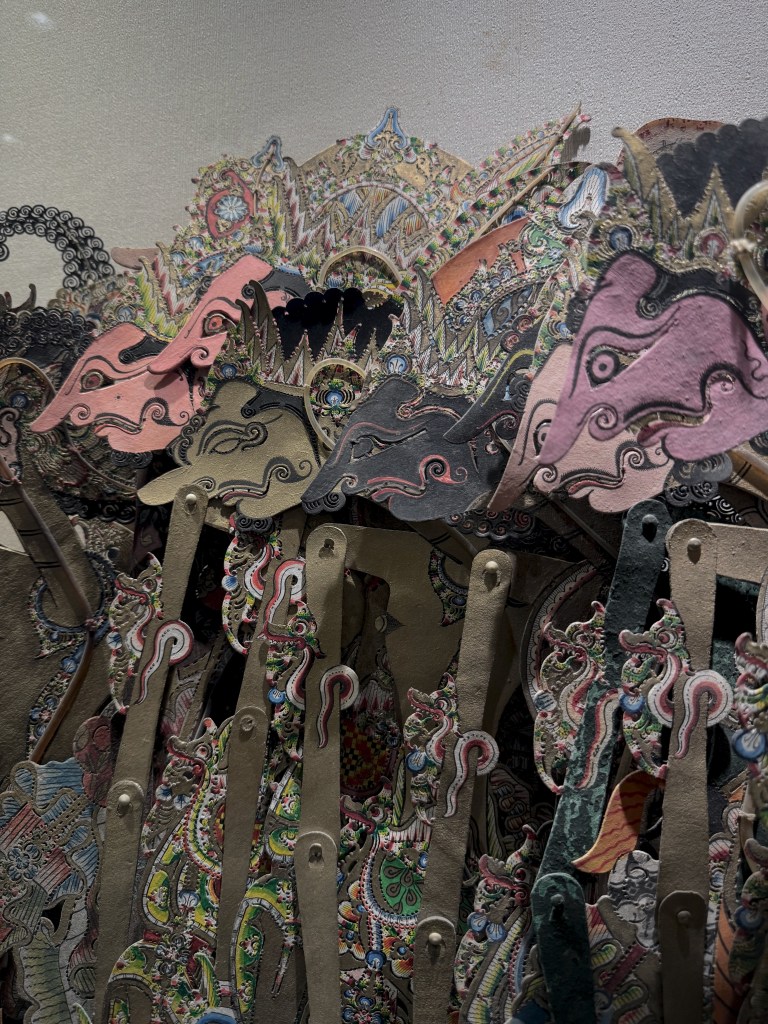
2. Explore wisely: We also stayed a few days in the city centre to check out the wayang kulit performances at Museum Sonobudoyo. Alas, we were told that these were not available between December and April due to fewer tourists – so be sure to check their schedule in advance. Adding to our dismay was an encounter with what we had initially perceived as a helpful stranger, who turned out to be a scamming tout pretending to introduce us to a craftsman who made puppets for the museum. We managed to extricate ourselves from a cramped atelier in an alley that felt daunting by claiming I was late for a massage appointment! We were later approached by touts twice within the museum grounds, which was annoying since we were already wise to their game by then.
STORY IN A CAROUSEL



 Angelina Hue
Join the Conversation