
Last December, I was in Vienna for the first time and it was for a project related to the historic Hotel Bristol. We had a soirée in the hotel’s Prince of Wales Suite – yup, it’s named after the prince himself and he stayed there with Wallis Simpson, the woman for whom he abdicated the throne.
Journalist A: Have you watched “The Third Man”?
Me: No. What is it about?
Journalist B: It’s a film noir about espionage in Vienna when it was occupied by the Allies after World War II ended.
Journalist A: The plot is full of suspense, especially the climatic scene in the tunnels!
Me: What tunnels?
Journalist B: Underground tunnels. There is a network of underground tunnels in Vienna…
During a tour of the 120-year-old hotel, we learned that Hotel Bristol was the headquarters of the American Allies during the occupation. The hotel’s general manager pointed out some tiny reminders of those days, including indentions in the brass stair railings left behind by soldiers with their rifles as they energetically exited the hotel.

The next day, we went to Hotel Imperial, which is diagonally across from Hotel Bristol on the Ringstrasse (Ring Boulevard).
Originally built in 1867 as the residence of the Prince of Württemberg, this is the grande dame of Viennese hotels. Klaus, the hotel’s general manager, hosted us for lunch in the splendid Imperial Suite, which was awe-inspiring with its high ceiling, fresco of smiling cherubs and enormous sparkling chandelier.
Somewhere in between the delicious three-way beets and arctic char main course and the decadent trio of Imperial Torte dessert, someone brought up the occupation.
Journalist C: Hotel Bristol was the HQ of the Americans. What about this hotel?
Klaus: During the occupation, Hotel Imperial was taken over by the Russian Allies. There was a lot of tension between the Russians and the other allies in the city.
Journalist C: And espionage, surely.
Me: Are there any tunnels connected to the hotel?
Klaus: As a matter of fact, yes. There was one that connected Hotel Bristol and Hotel Imperial, so that the Russians or Americans could move between the two hotels via the tunnel if there was any emergency. It is also possible that there were spies or double agents who used the tunnel too.
Me: Oh wow. Is it still open?
General Manager: No, the city closed the tunnel after the occupation.
It’s fascinating to learn about the stories that lie within the walls of these century-old buildings and how they have played a part in the city’s history and culture.

I tucked “The Third Man” into the back of my mind after I left Vienna.
However, his slippery shadow emerged during a chance encounter at Nijinski, my favourite second-hand bookshop in Brussels.
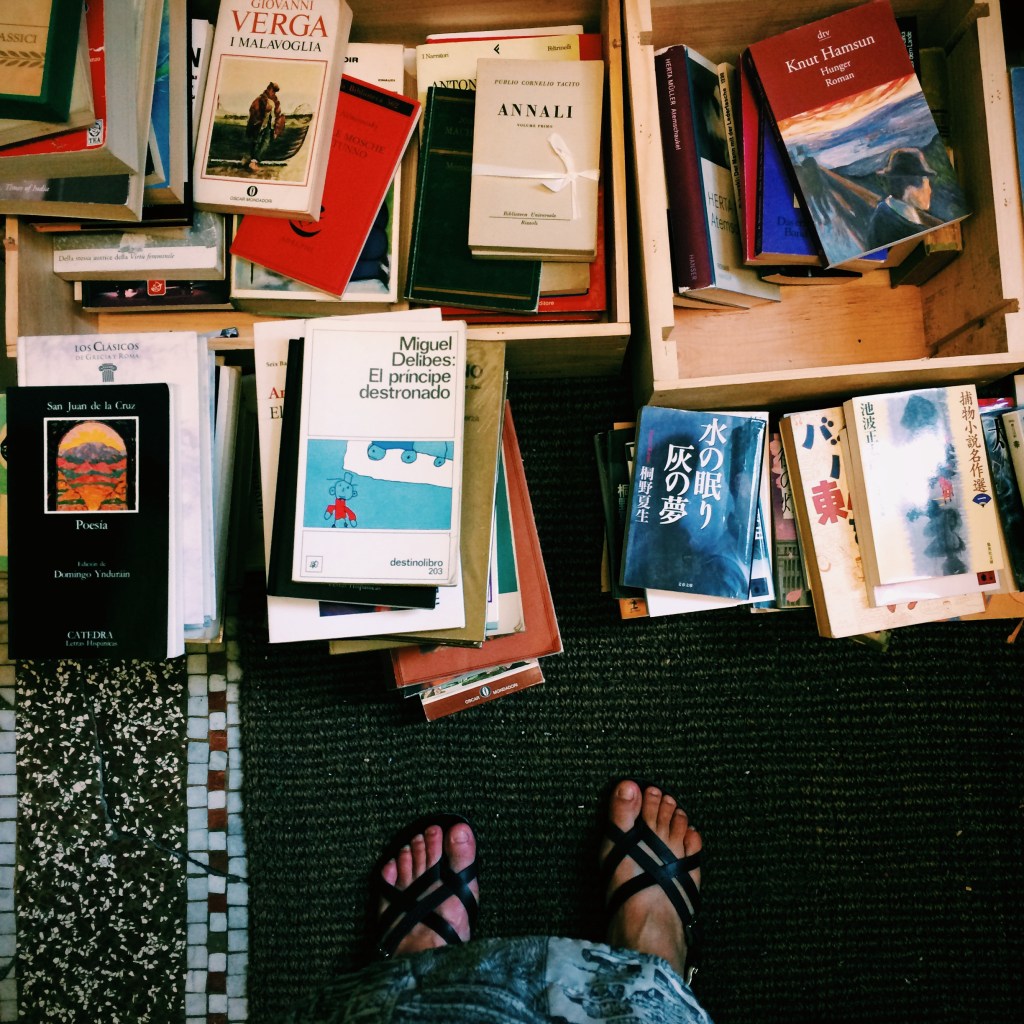
I left Nijinski with The Third Man & The Fallen Idol, as well as with The Man Who Was Thursday. It was quite an unusual company!
I stopped at a new Italian cafe and ordered a barraquito. Served in a small glass, this drink is made with an espresso shot, some condensed milk and frothed milk, with a dash of cinnamon and twist of lemon. I was told that this is the typical way that coffee is enjoyed in Tenerife. Good to know that it is not only in southeast Asia where coffee is commonly mixed with condensed milk!
Out on the cafe’s terrace, The Third Man beckoned.
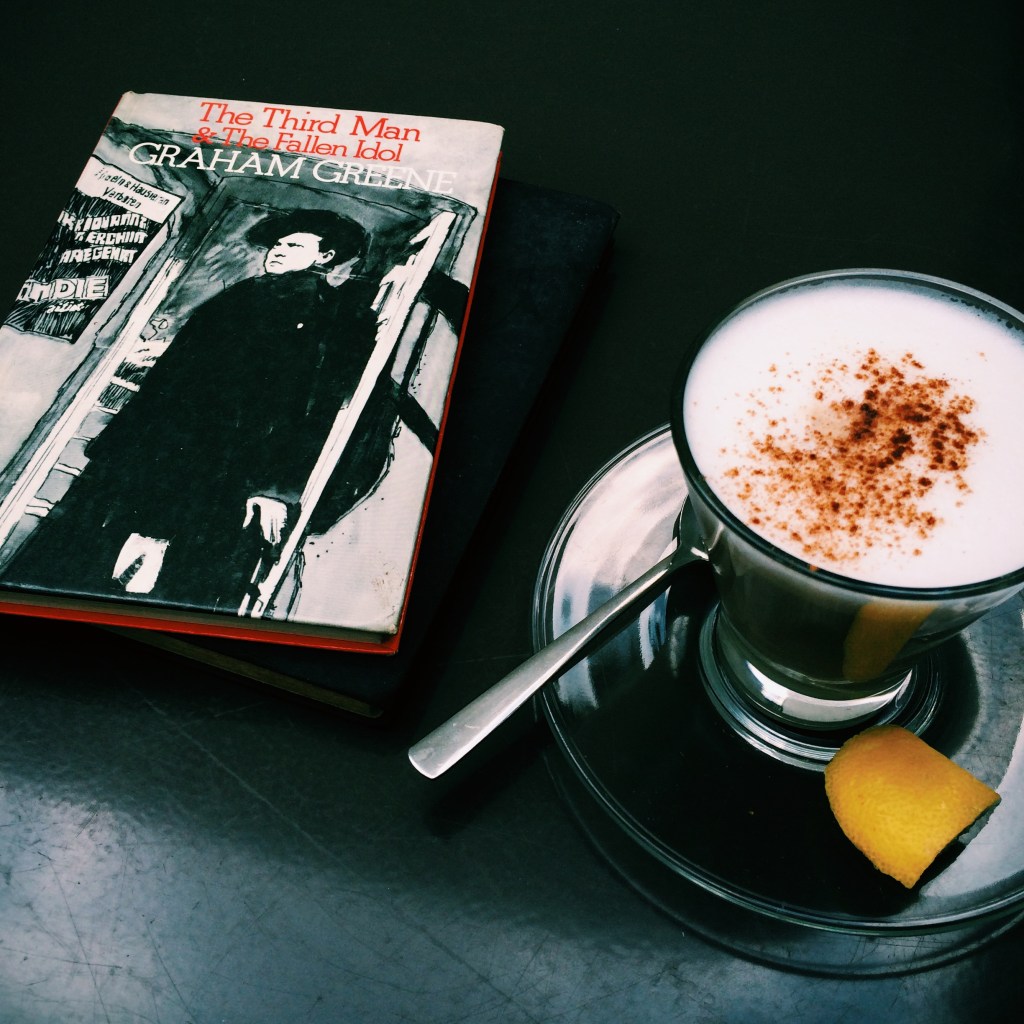
The 1987 edition that I bought contains a preface from Graham Greene for each of the two stories. It was interesting to note that The Third Man was never meant to be read but only to be seen as a film. I love how Greene described the creation of The Third Man: “Like many love affairs it started at a dinner table and continued with many headaches in many places: Vienna, Venice, Ravello, London, Santa Monica.”
The protagonist is Rollo Martins – he appears as Holly Martins in the movie. The story starts with Rollo arriving in Vienna during the occupation upon the invitation of an old friend, Harry Lime. The latter’s name immediately gives me the impression that he’s a slimy character (is that why his family name rhymes with “slime”??)
I’m not going to say more about the story except that there are plenty of twists and turns with the plot getting thicker and darker.
The Third Man is a short and engaging story. I finished it on the same day. Enthused, I suggested to AB that we watch the movie. Having read the book, including the preface which mentioned the differences between the film and the story, I was curious to see how the movie is like.
It was fun to watch the story come to life, especially with the comic touches in some scenes which didn’t come across as prominently in the book. I particularly enjoyed the cinematography of the climatic chase scene in the tunnels.
What about The Fallen Idol?
Contrary to the latter, The Fallen Idol was not written for the films. It was first published in 1935 as “The Basement Room”, which is where Baines the butler lives in the house where he’s employed. No espionage here, though there’s plenty of intrigue and deceit surrounding little Philip who idolises Baines. And perhaps a murder too?
While The Fallen Idol is a shorter story, by about 75%, compared to The Third Man, the two films are about the same length and directed by Carol Reed.
Initially, I felt that the pace of the movie was rather slow. This quickly picked up as secrets are unwittingly revealed, resulting in charged and conflicted emotions.
We enjoyed the film version of The Fallen Idol tremendously. At one point during the movie, AB said, “I don’t like it… as in, I don’t like what (dreadful thing I know) is going to happen next!”
I give a big thumbs-up to The Fallen Idol film. Make it two. AB and I agree that its plot is more intriguing and exciting than that of The Third Man. The acting is brilliant too, especially the performance from Robert Henrey who played the little boy.
 Angelina Hue
Leave a reply to nightlightart Cancel reply