What if you could be someone else yet retain your memory and thoughts?
I recently bought a secondhand copy of Hanif Kureishi’s The Body at Nijinski.
The eponymous novella, which kicks off this collection of short stories, revolves around Adam, a successful playwright in his 60s who has seen better days.
Like most people of his age, he sees and feels the impact of the years on his body. This includes a growing mid-section which led him to wear his trousers up to his chest until his children protested against it. While he doesn’t like these physical changes, he accepts and adapts to them.
What if you were in your twilight years and could transplant your brain into a younger, healthier body?
One day, Adam is approached – perhaps, solicited, would be more appropriate – by a young aspiring actor at a party.
The proposition: Would he like to be a ‘Newbody’?
Intrigued by the possibilities, Adam decides to transfer his brain into a new ‘facility’ – this is what human bodies are called in this short story.
For him, this is an experiment that is to last for just six months.
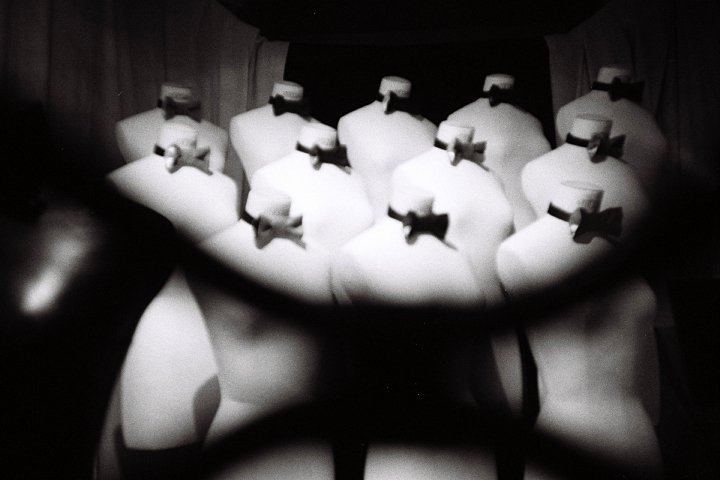
Having made the first decision of being a ‘Newbody’, he has to choose his new ‘facility’ from a morgue containing men and women of different ethnicities who died in their twenties and thirties.
Adam’s new ‘facility’ is a good-looking young man with light brown skin, soft brown eyes and a ‘fine, thick penis’. Not surprisingly, the latter is quickly put into action whenever a suitable opportunity presented itself.
Adam in his new persona – Leo Raphael Adams, embraces his new life swiftly with renewed vigor and passion.
He wanders around Europe as a carefree backpacker, experimenting with drugs and sex, and dancing all night long in clubs. During his clear-headed moments, he contemplates and observes how youth might be wasted on the young.
The novella goes on with new revelations and unexpected twists in its precise rhythm, before morphing into a horror story of sorts.
I suppose the premise of this story – to transfer one’s consciousness, thoughts and memories into another body – is not new. Nonetheless, I found The Body to be very intriguing and surreal, as well as philosophically interesting.
What if you could live forever young?
This is what the ‘Newbody’ technology allows for – the possibility of changing to a new and younger ‘facility’ whenever the current one is deemed old or deteriorating.
It is not the same as cryonics – which is basically the preservation of clinically dead people at low temperatures with the hope of reviving them in the future.
But it would be interesting to discuss the psychological and social effects that each will have on individuals and the society, as well as the ethical and philosophical questions that arise.
How will you tell a ‘Newbody’ apart from a real person? Does occupying a body of a deceased make you any less real if you possess your original mind and consciousness? Would people be more careless or irresponsible if they knew that they could have a new ‘facility’ if the need arises?
 Angelina Hue
Leave a reply to angelinahue Cancel reply