
Earlier this week, there were three ‘dying’ bananas on my kitchen counter and an opened bottle of milk that I wanted to finish before it went bad. After searching online, I decided to try a banana bread recipe that I found on BBC.
An hour and a half later, there was a lovely loaf of golden brown banana bread cooling on a rack and my apartment smelled of, well, bananas. It was delicious. Buttery with a lightly caramelised exterior and a nicely dense texture.
I brought a large portion of the bread to the office the next day and decided that I would leave it in the pantry with a note inviting my colleagues to have some. “What will the note read?” I wondered. While walking to work, I had an “eureka!” moment. The result:
I have been working on “Unlock Art“, a series of films that is being produced by Tate in partnership with Le Méridien Hotels & Resorts with the aim to make art more accessible to more people. Pop Art is the focus of the latest film that we launched – you can watch it here, presented by Scottish actor, Alan Cumming.
That – together with an article that I read recently about a lawsuit between The Velvet Underground and the Andy Warhol Foundation for the Visual Arts regarding the infringement of the trademark for the banana design on the band’s The Velvet Underground and Nico album – inspired my note.
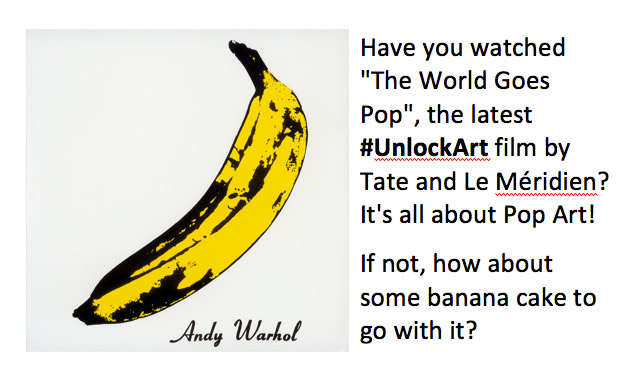
Happy to say that the banana bread was very well received!
Here’s the recipe that I adapted from John Barrowman’s rendition:
Ingredients
285g all-purpose flour
1 tsp bicarbonate of soda
½ tsp salt
90g unsalted butter, softened, plus extra for greasing – the original recipe uses 110g of butter
170g granulated sugar – the original recipe calls for 225g caster / super fine sugar. I find that the 25% reduction in sugar is just the right amount of sweetness for me. Any more, it would have been cloying.
2 medium eggs
3 large ripe bananas, mashed – Barrowman used four bananas
85ml buttermilk – I substituted this with 80ml normal milk mixed with 1½ tsp lemon juice
1 tsp vanilla extract
Instructions
1. Preheat the oven to 180°C
2. Sift the flour, bicarbonate of soda and salt into a large mixing bowl.
3. In a separate large bowl, cream the butter and sugar together until light and fluffy. I did the creaming by hand until the mixture turned light yellow and slightly fluffy. I had to stop as my arm was aching! Here are some useful links on how to do it right: video and on The Kitchn
4. Add the eggs, mashed bananas, buttermilk and vanilla extract to the butter and sugar mixture and mix well. Fold in the flour mixture gradually.
5. Grease a 20cm x 12.5cm/8in x 5in loaf tin and pour the cake mixture into the tin. Transfer to the oven and bake for about an hour, or until well-risen and golden-brown.
6. Remove from the oven and cool in the tin for a few minutes, then turn out onto a wire rack to cool completely before serving.
While writing this post, I was also listening/watching an insightful BBC documentary about human’s addiction to sugar. Topics include the evolution of the sugar trade, origins of the British afternoon tea tradition, the prevalence of sugar and corn syrup in produced foods and modern-day diets, and how high-calorie sweets affect the brain and cause diabetes.
Other interesting information:
Rare and extremely expensive in 13th century England, sugar used to be a symbol of status and was displayed as art pieces in the homes of the wealthy. An example cited in the documentary was a decadent six-feet-high sugar sculpture, “the equivalent of having a Maserati nowadays”.
Ladies of the 16th century coated their teeth black as it was deemed trendy since their queen, Elizabeth I, had a set of black decaying teeth from eating too many sweets.
If you have an hour to spare – for instance, while waiting for the banana bread to bake – I would recommend watching this excellent documentary. Though it may give you second thoughts about eating more than one slice of the delicious banana bread!
 Angelina Hue
Leave a reply to angelinahue Cancel reply