
We went to Morioka in search of Nambu tekki tetsu-bin (cast iron kettle). This was our first trip to Japan since the Covid-19 pandemic.

Morioka is the capital city of the Iwate Prefecture in the Tōhoku region of northern Japan. It also has a long history of making high-quality cast ironware.
We visited Iwachu, a well-known manufacturer of Nambu tekki founded in 1902. Thanks to AB’s resourcefulness, we learned that their workshop in Semboku opens to the public once a week and found out the exact time for the casting process.

When we arrived, a quiet calm permeated the space as the craftsmen, known as kamashi, went about their tasks. Each huddled in their own corner, polishing or refining different aspects of the ironware.
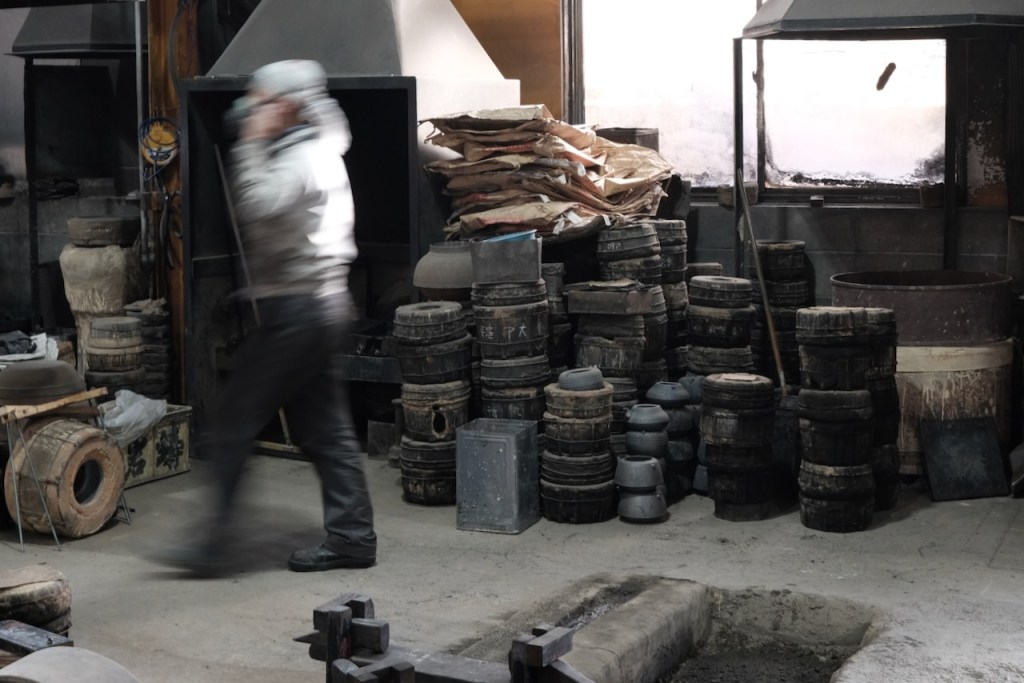

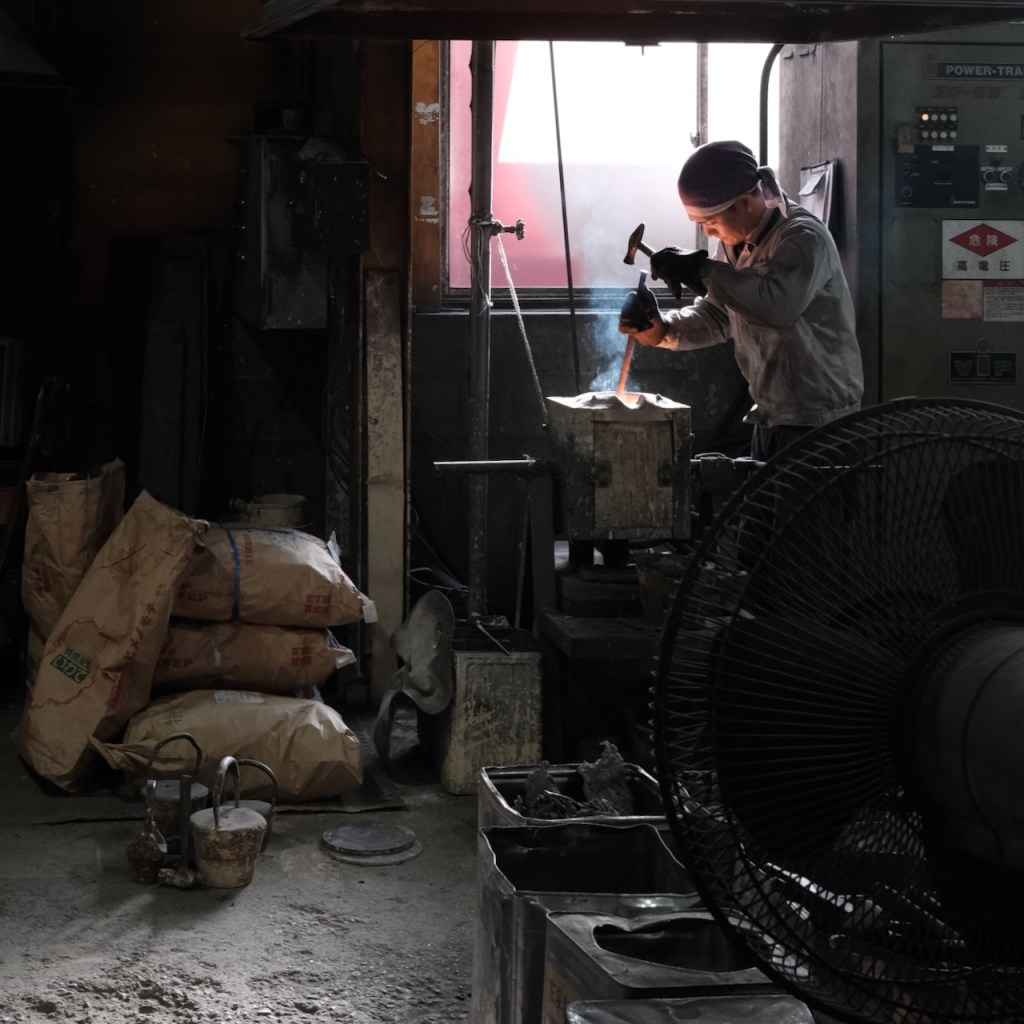
One of the younger artisans occasionally peered into a metal case that exuded a warm glow. This was the electric furnace where the iron was melted at a scorching 1,400℃.
As the hour approached, the energy shifted. Three men took their positions in the centre of the workshop, surrounding a pit in the ground. They placed narrow wooden planks against the edge of what looked like blackened wooden barrels.

In a smooth motion, the young kamashi tilted the metal furnace. A bright orange liquid then flowed into a yugumi, a ladle with a long handle that he held carefully.
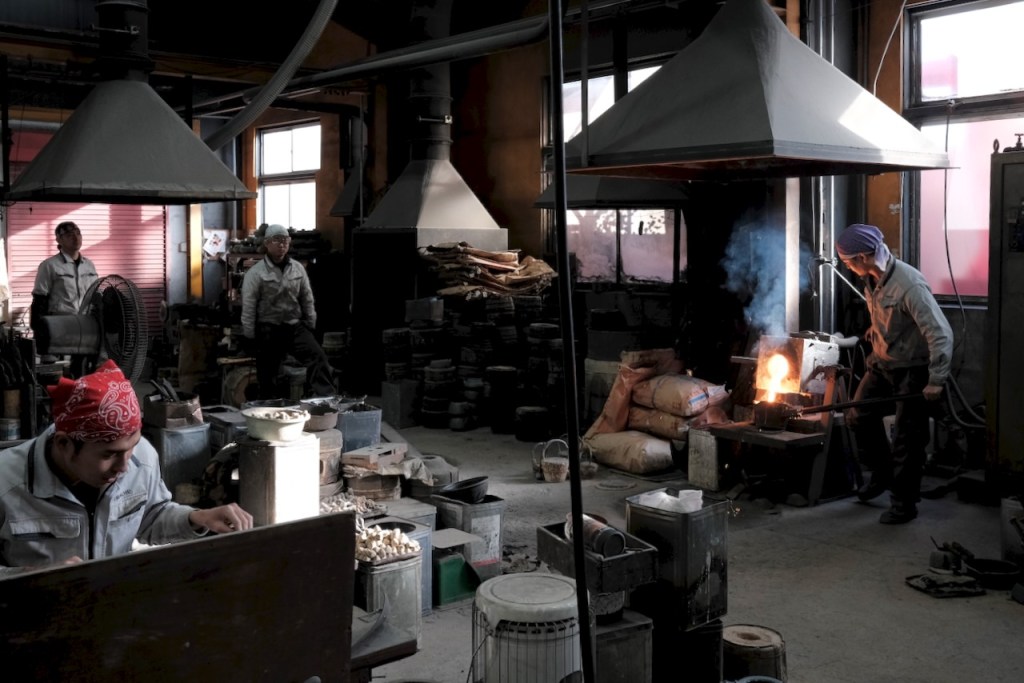
He stepped over to the pit. With steady hands, he poured the molten iron into a wooden cast as his colleague stood across from him, both men balanced on the narrow planks. They poured the remaining liquified metal from the cast back into the yugumi, repeating these deft movements with another mould.


It was hypnotic to watch their rhythmic movements. Bright sparks flew as the molten iron transferred between the containers, with puffs of steam rising into the cool air.
Later, as the cast iron cooled, it was removed from the mould, revealing a red glow.

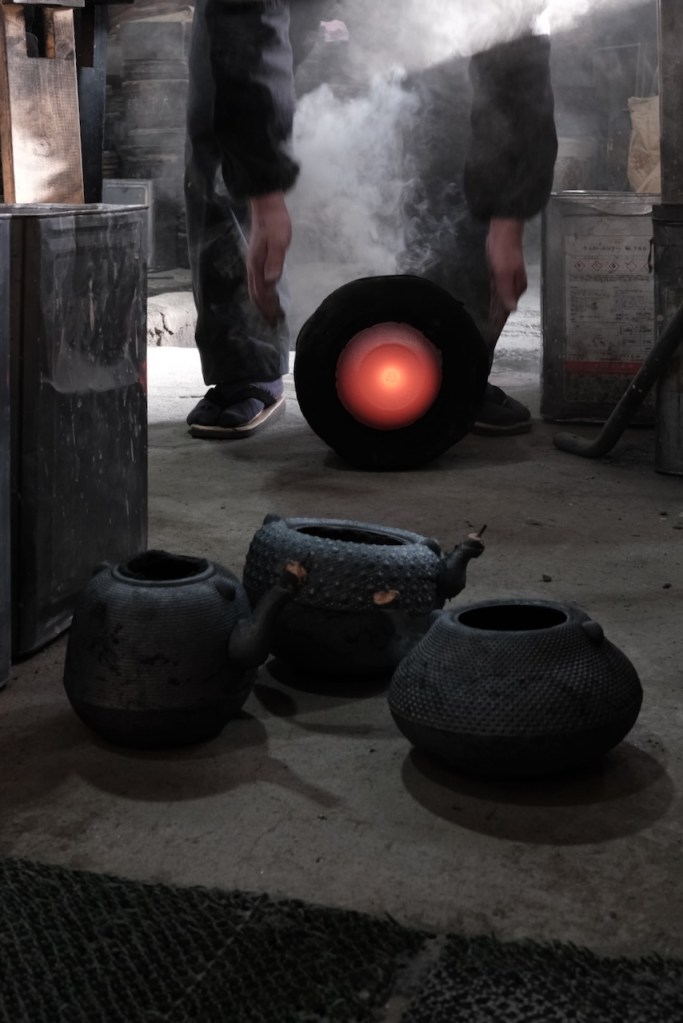

In another corner, an artisan coated teapots and kettles with an iron acetate solution called ohagruo (“tooth blackening”), named after an ancient Japanese custom.

We spent over an hour documenting these craftsmen in action, and we were the only visitors the entire time. Alas, we didn’t find something we absolutely loved and would be willing to haul around for the rest of our two-week journey.


After our visit in December 2022, Morioka was featured in The New York Times’ annual round-up of 52 places to visit, the only destination from Japan.
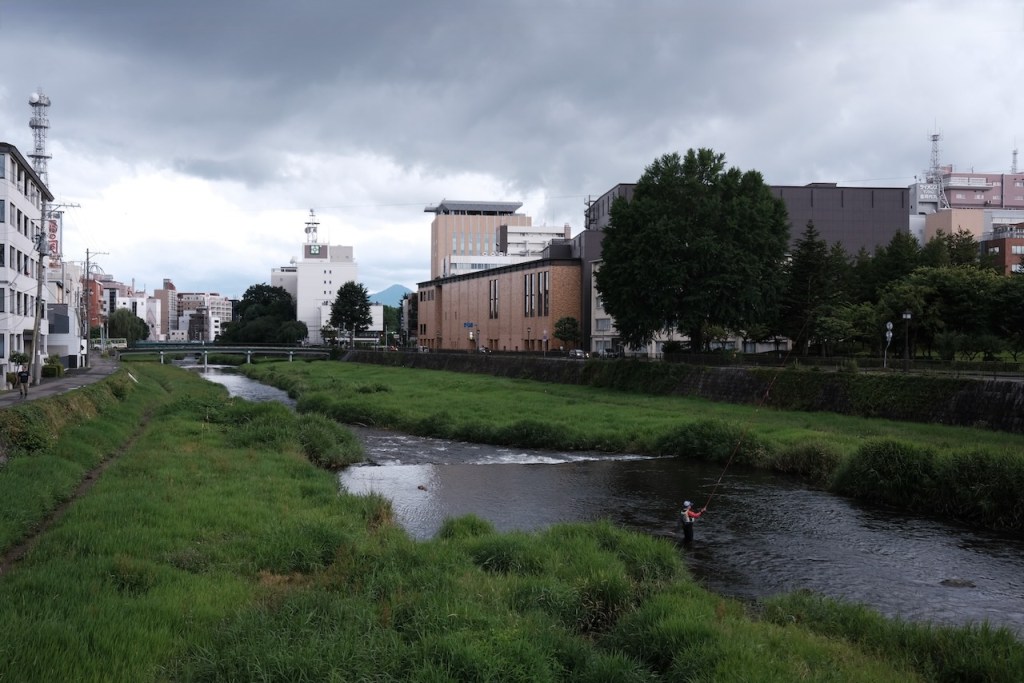
We returned to Morioka in the summer of 2023, still hoping to find a Nambu tekki tetsu-bin. We thought the city might be crowded with tourists, but to our relief, it was not.
We revisited Iwachu and explored other cast iron shops. Once again we left Morioka with no cast ironware. Our search continues!

 Angelina Hue
Join the Conversation