
Some call it Samlor Koko (សម្លកកូរ). Others refer to it as Samlar Kako, Samlor Korko, or Somlaw Koko. The name of this dish literally means “stirring soup” where “samlor” is the Khmer word for soup and “koko,” stirring.
Samlor Koko is a rich vegetable soup made with kroeung (spice blend) and prohok (fermented fish paste), quintessential ingredients in Cambodian cuisine. I came to know of this dish from an article on cooking classes in Siem Reap. Loaded with an assortment of vegetables in an aromatic stew, it seemed like something we would like. So I set out to find it when we were finally in Siem Reap.
I had expected Samlor Koko to be served in restaurants since it is regarded as a national Cambodian dish. Alas, that was not the case. We came across various “samlor” items but this vegetable stew remained elusive.
Perplexed, I tried to find out more from Sarath, Chef de Partie at Park Hyatt Siem Reap, where we were staying. He looked at me with a puzzled expression. Perhaps, I thought, I had butchered the pronunciation, so I tried again. It eventually clicked and he said, “Oh, Samlor Koko…” and mentioned that his grandmother would cook it all the time.
Excited that I was finally making some headway in my search, I asked him where I could try it in Siem Reap. He explained that it is made with whatever vegetables are to be found in the garden for people who live in the countryside. However, it is not commonly available in restaurants in the city as people wouldn’t go out to eat it.
It took me a while to process what he told us. “Do you mean that Samlor Koko is commonly eaten in Cambodia but mostly at home and not in restaurants?” To which he replied with an affirmative nod. Bummer. I guess it was not meant to be.

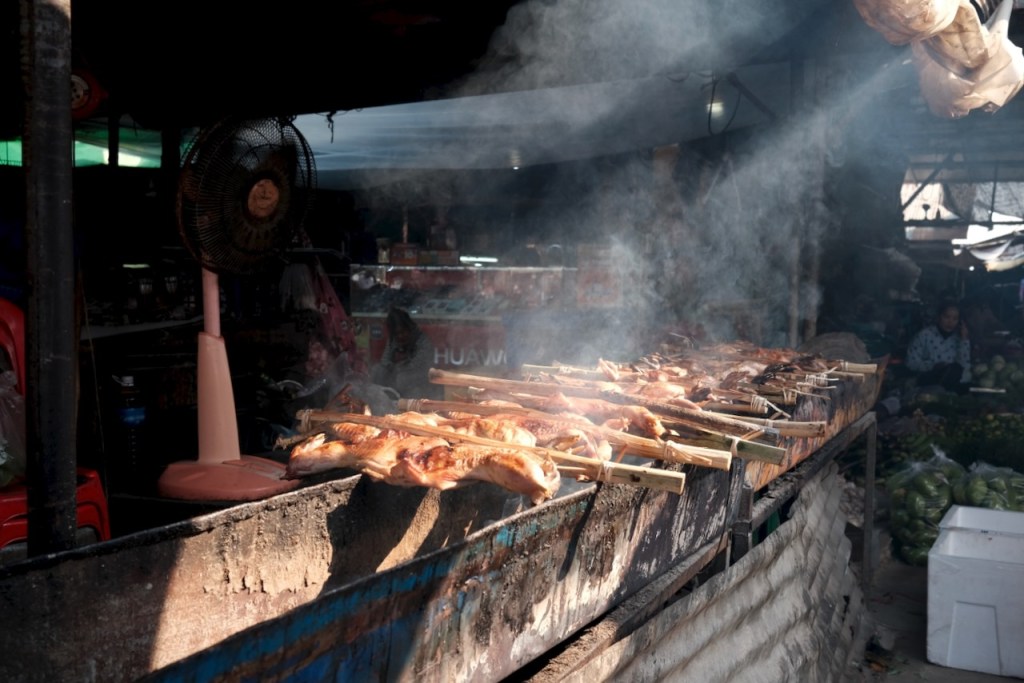
The next day, AB and I visited a local market in Puok, outside the main city centre. We were told that the town is known for grilled chicken, which was the first thing we saw when we arrived. At the entrance was an outdoor food stand with an electric fan blowing clouds of smoke around. There was a row of entire chickens flattened between bamboo halves, with dripping fat sizzling on the hot charcoal.

Our guide informed us that most of the fruits and vegetables sold came from Thailand and Vietnam. According to him, the locals prefer the imported produce as they tend to be larger and look better than those grown locally.


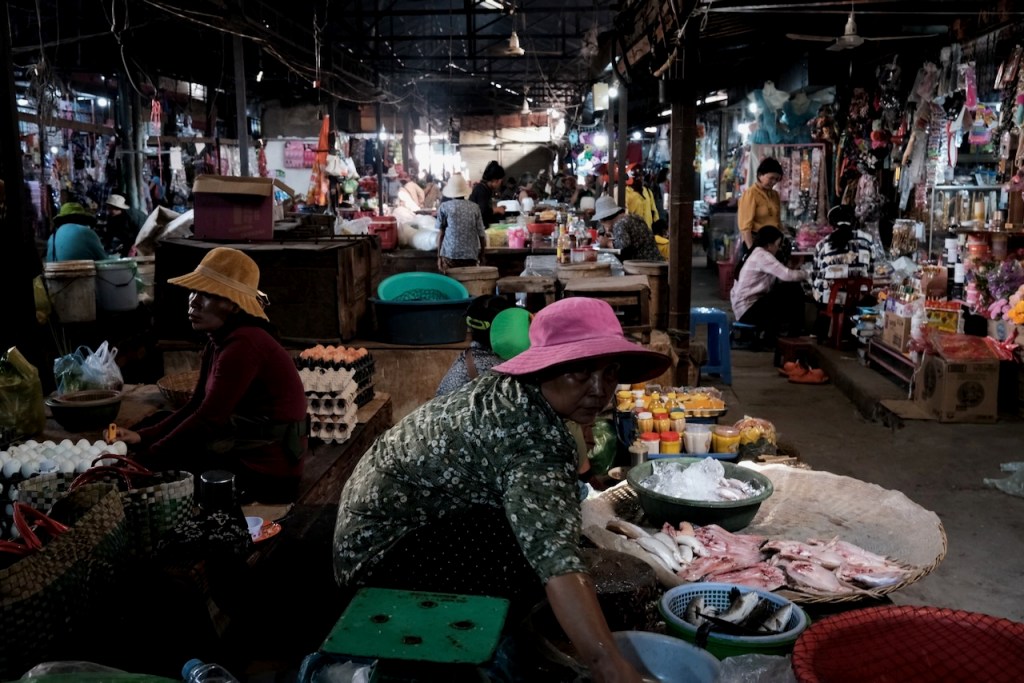
In the dim halls of the market, we passed heaping buckets of pungent prohok made from different fish. I spotted a woman assembling bags of chopped vegetables with a basin of turmeric-coloured paste next to her. Could she be selling prepared bags of Samlor Koko?
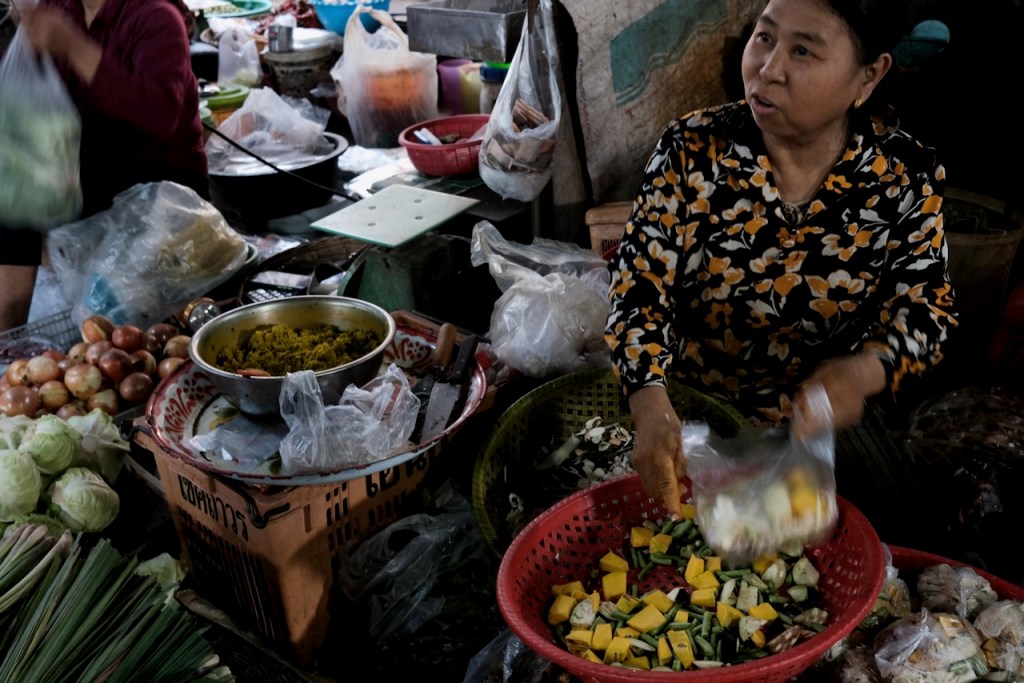
I asked our guide if that was kroeung in the basin. My question was overheard by passers-by and the shop ladies smiled and tried to correct my pronunciation – you’re supposed to emphasise the final consonant (“ng”). My next attempt – when I said “Samlor Koko” – brought about another chorus of friendly laughter and enthusiastic nods.

The next day, Chef Sarath greeted us when we sat down to have dinner at the hotel’s restaurant. He had returned to his hometown on his day off earlier in the week. I gleefully shared with him that we found Samlor Koko, albeit in its raw form, at the market. He then surprised us by informing us that he had brought some ingredients to make Samlor Koko for us.
He returned later with a white claypot, together with rice and chopped red chilli. As he lifted the claypot lid, out came whiffs of the fragrant soup. There it is – the elusive Samlor Koko!
There is little specification on the kind of vegetables to use. You would use whatever you could find in your garden. Kind of like the French ratatouille with its tomato-based mix of summer vegetables.
Chef Sarath’s rendition of this home-cooked dish featured crispy eggplant, pumpkin, banana, green papaya, jackfruit and catfish. I also noted an ingredient which may have been a misspelt “slerk mrum” (moringa leaf) – that is grown around his house.
My photo doesn’t do the dish justice as I took it in haste as I was in a hurry to finally try samlor koko. The flavour was complex with the various herbs and spices plus fermented fish paste. It was so satisfying.

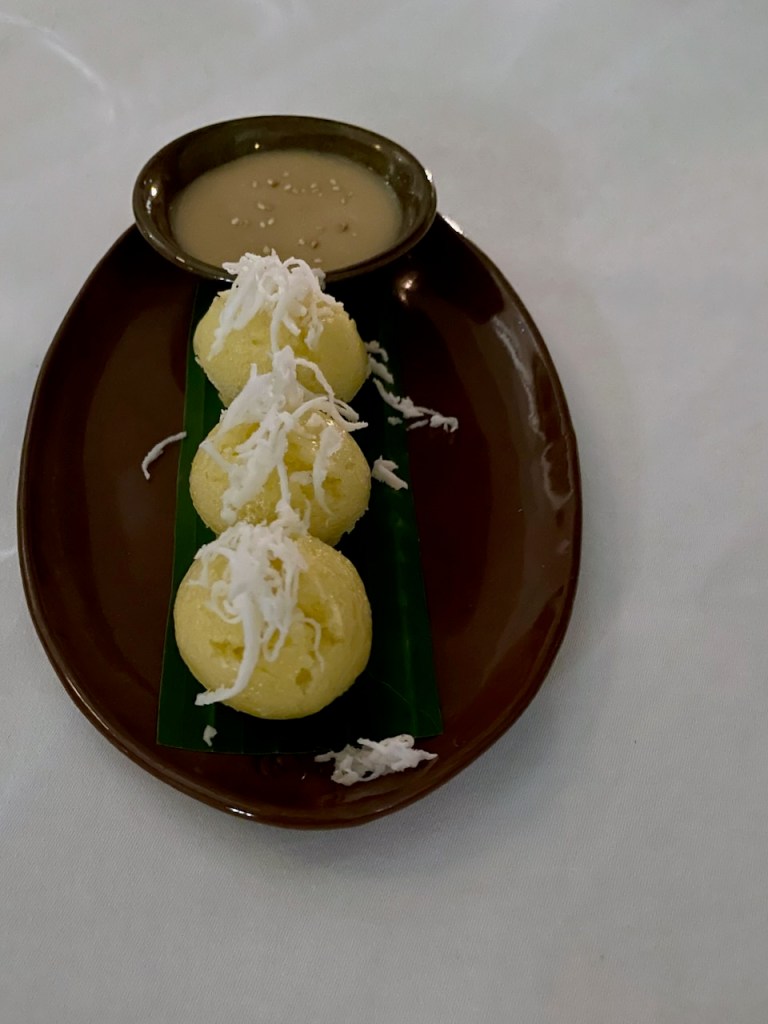
To top it off, we were offered a trio of Nom Akor, steamed rice cakes, for dessert. Made with glutinous rice flour and palm fruit, these mini buns feature on one of the culinary experiences that Chef Sarath hosts for guests at Park Hyatt Siem Reap.
Am grateful for Chef Sarath’s warm hospitality to go over and beyond to share with us a taste of Khmer home-cooking. Au Kun Cheraown (អរគុណច្រើន)!

 Angelina Hue
Join the Conversation