We arrived at Beng Mealea after 8am on a Sunday. There was nary anyone else at the temple. As we left the car, we could hear faint strains of music from a wedding celebration in the vicinity. Walking along the dirt path, the music faded into the background, replaced by cicada chorus and bird song.

Surrounded by jungle, Beng Mealea served as a hideout during the Khmer Rouge regime. We passed a minefield clearance sign stating that over 1,200 explosives had been cleared in the area since 2003 – a chilling reminder of the country’s dark episode.

Beng Mealea is some 70 kilometres from Siem Reap city, which is around an hour away by car. Located 40 kilometres from the main Angkor temples, it sits along the ancient royal highway connecting Angkor Wat to Preah Khan Kampng Svay in the east.
The history of Beng Mealea is unknown as no records have been found. The temple is believed to have been built during the reign of King Suryavarman II in the early 12th century as its architectural style is similar to that of Angkor Wat.
While it is less extensive than Angkor Wat, Beng Mealea is one of the larger temples from that era. The imagined layout of the temple by French explorer, Louis Delaporte in 1860 shows the potential scale of the temple. Once upon the time, Beng Mealea was at the heart of a town and surrounded by a significant moat.

Beng Mealea has remained unrestored since its discovery in the 19th century. It is unlike Ta Prohm – a.k.a. Tomb Raider Temple – where the jungle has been trimmed back with some trees left in place to give a touch of the original lost-to-nature vibe.
When Cambodia was a French Protectorate, minor works were done on the naga balustrades and some parts of the library. Other than that, little intervention has taken place.


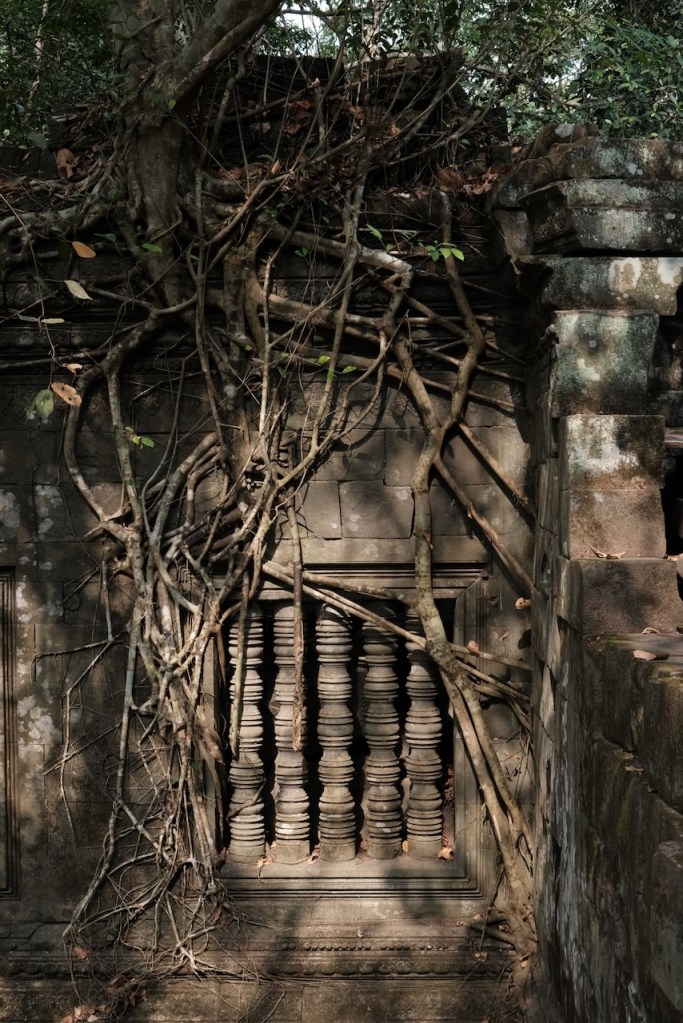
Tree roots and vines have grown all over the ruins, amidst collapsed piles of sandstone. The morning light on the intricate carvings cast a magical mystique on the place. The smell and smoke of burning leaves only added to its indelible charm. In the rainy season, the stones would be covered in green moss – creating an otheworldly atmosphere.
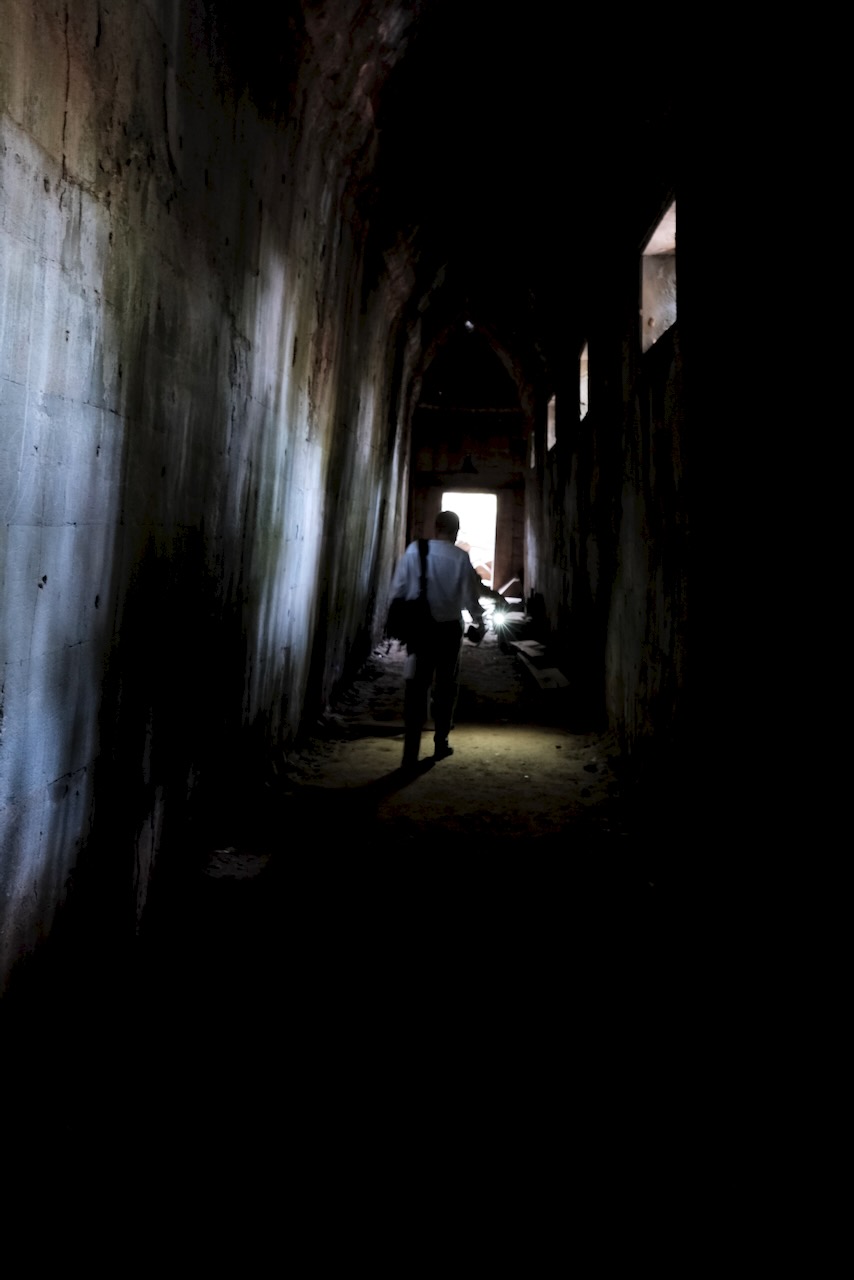
Today, visitors can traverse the grounds via a wooden boardwalk which in turn protects the crumbling, and crumbled, structures from further disturbances.

According to our guide, the Temple Run game was modelled on Beng Mealea. He added that the temple was popular with Chinese visitors as it is believed that treasures were buried under the collapsed main tower. Before the pandemic, Chinese tourists would arrive in the busloads and, inevitably, break the charming silence of the place.

We were grateful to be exploring Beng Mealea in peace as few people have stopped by here since Covid. That the temple is further out from the Angkor circuit also means that fewer people make their way out here.
Today, it is on the Tentative List of the UNESCO World Heritage Convention. So who knows if things may change in the future.
 Angelina Hue
Join the Conversation