
Have you watched “Chungking Express,” the 1994 arthouse film by Wong Kar Wai? The film’s infamous setting at Chungking Mansions gave it its name. Its Chinese name, “重庆森林,” is also a metaphorical reference to the concrete jungle that is Hong Kong. All that said, other than inspiring the title of this post, the movie has nothing to do with the rest of this article.

I recently thought of Chongqing. English speakers referred to this city as “Chungking” in the early 20th century. Revisiting the photos that I took in 2019, I recalled why the city had left a deep impression on us. Chongqing’s striking urban landscape is unlike any other city that I’ve visited.
The metropolis has countless towers across its mountainous terrain. An embodiment of the “concrete jungle” on a staggering scale. The populous city’s old and new buildings were close to one another. Like a never-ending sprawl of compact vertical beehives of varying heights for humans. Even so, new towers were rising across the skyline to house the city’s growing population.

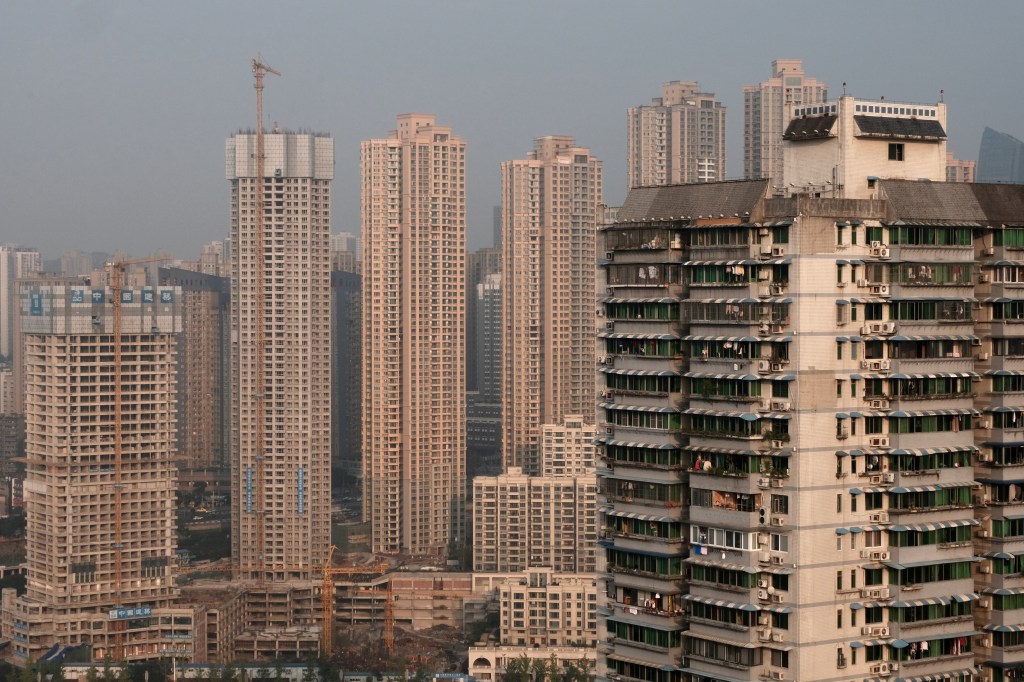
We barely scratched the physical and figurative layers of its urban fabric. As I look back at my photos of the buildings and everyday life, I spot many fascinating details.
For instance, green spaces were commonplace amidst the haphazard layout. Apart from the public parks, there were many rooftop “gardens”. People would exercise, tend to their plants, or chat with friends on the rooftops. Here was where people could escape the busy streets and small apartments below.
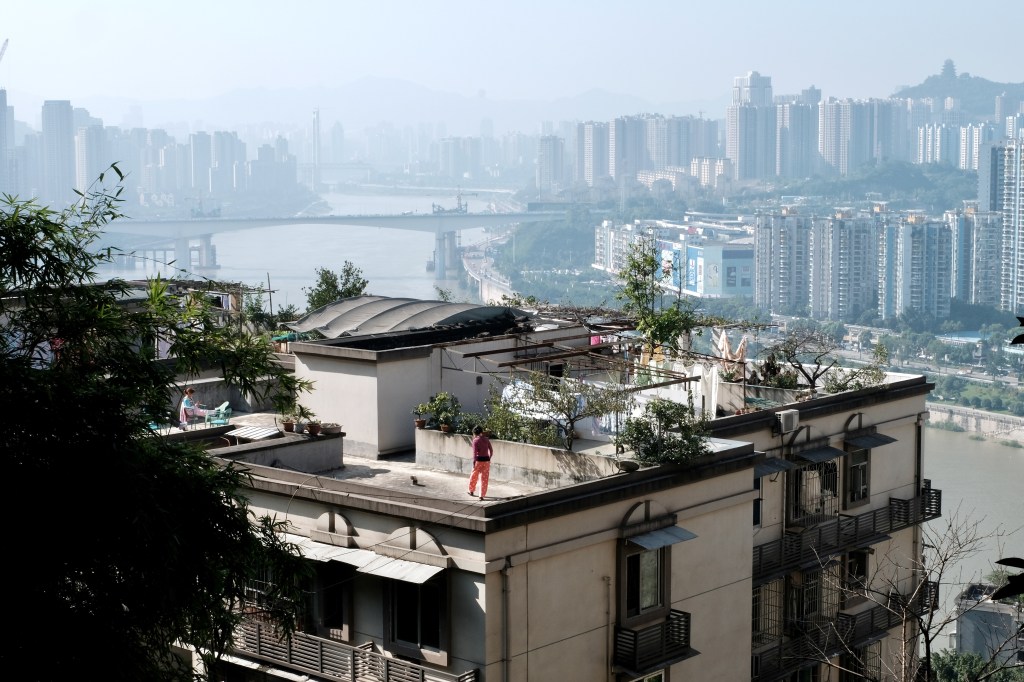
Chonqing is a historical and prominent city. It was the country’s temporary capital during the Sino-Japanese War and World War II.
It has several nicknames, including Mountain City, River City, and Fog City. The latter is due to the prolonged period of fog caused by the high humidity. This name is now even more apt because of the constant, polluted grey skies. Chongqing was one of the earlier cities to be part of China’s economic reform in the 1980s. Cheap, poor-quality coal from northern China fuelled the city’s rapid industrialisation. The mountains helped protect its people from the enemy in wars. But today, they trap the modern-day smog, a silent killer.
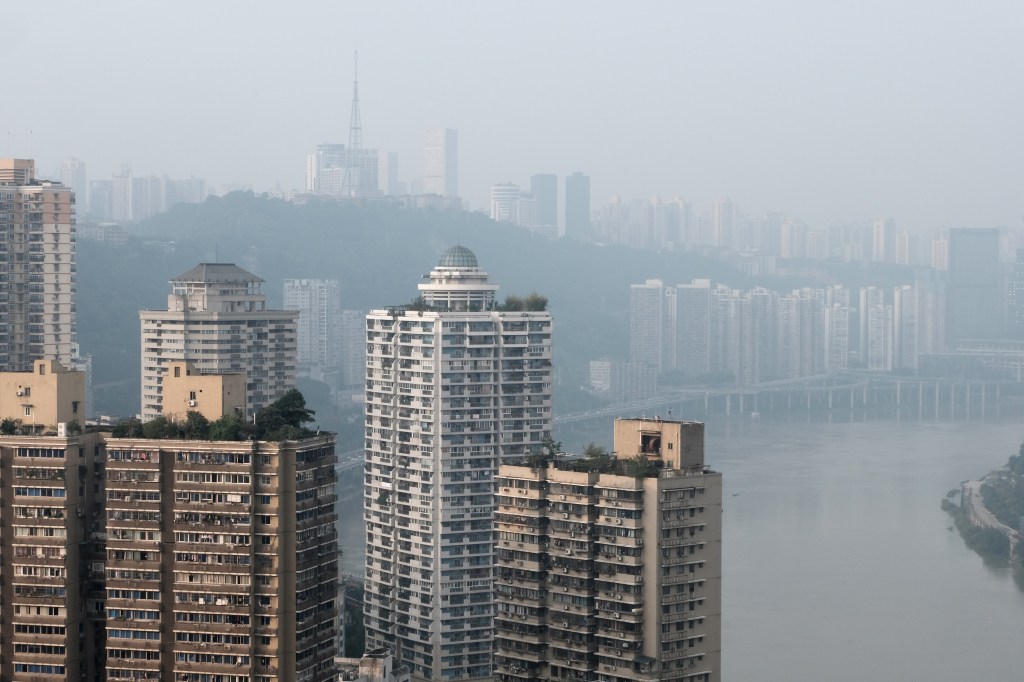
Our “hotel” was in a residential tower in Yuzhong District (渝中区). We didn’t mind that the lodging was basic as it came with panoramic views overlooking the Jialing river (嘉陵江). From our lofty perch, we took countless photos of the sprawling city around us. We also (spied on) observed students practising drills in a nearby school.


Yuzhong District is the modern name for what was the old city of Chongqing. Located at the confluence of the Yangtze and Jialing rivers, Yuzhong District is the political, economic, and entertainment centre of the megacity.
There must be more buildings and people now in Chongqing since our visit in 2019. How much of it has changed, and what has remained the same? Some of the interesting spots are likely flooded with more tourists now. Brought there because of what they saw on popular social media channels like Xiao Hong Shu to “打卡.” This phrase means to clock in for work. On Chinese social media, “打卡” means you’ve checked in to a place.
For this reason, I sometimes hesitate to write about certain places. To keep it under wraps so that it doesn’t attract too much attention. But in the case of Chongqing, I’m sure other people in China have already written about them at length. After all, I had found most of them through a rudimentary search on Baidu and Dianping websites!
Climbing up and down stairs and slopes is a part of everyday life in Chongqing. In some places, there are lifts and escalators to help ease the effort. High-rise buildings in the city often have entrances at different levels. The stairways in them serve as a vertical passage for both residents and the public to navigate the city.

Bai Xiang Ju (白象居) is a residential complex built in 1993 on a slope along the Yangtze. The six blocks rise to the same height, but in fact range from 10 to 26 storeys. There are no elevators in these blocks; lifts were a rarity in those days in China. Residents navigate the complex via elevated bridges linking buildings and strategically positioned entrances. For instance, there is an entrance on the 15th floor from the main road at the top of the slope.


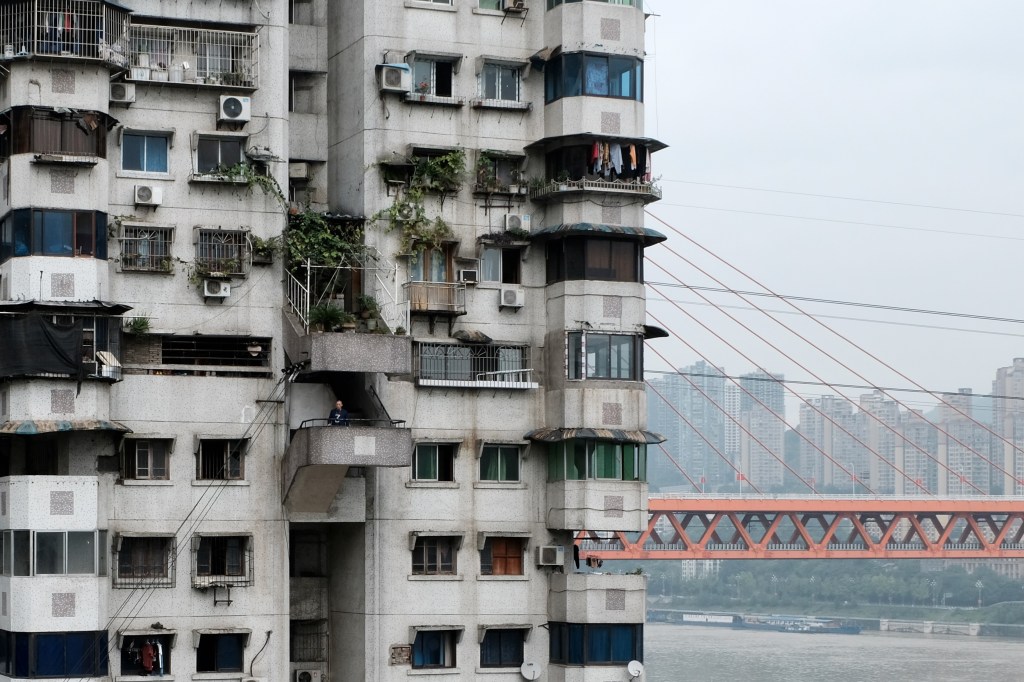

From some parts of Baixiangju, you can see up close cable cars ferrying people across the river. The station for the Yangtze River cableway (长江索道) is a short walk from the residential complex.

Since 1984, it has been carrying people across the river, linking Yuzhong and Nan’an districts. Now, this has become more of a tourist attraction than a mode of public transportation. We decided to ride it anyway. The queue was insane. We waited almost an hour for a five-minute ride. Was it worth it? It was interesting for the different perspectives. But it was crowded with limited space between people and the wait was long.

Instead, I would suggest taking the Chongqing Rail Transit Line 2. Aside from the city and river views, a highlight is the Liziba Monorail Station (单轨李子坝站). The monorail passes through and stops in a mixed-used tower at 39 Liziba Main Street. This unusual situation arose as the station’s site coincided with an approved plan for a building. After much analysis and re-designs, a plan was developed to construct both projects together. As such, the station occupies the sixth to eighth floors of the building.

Most visitors wait on the street to photograph the trains passing through the building. I think it is more fun to take the train, which was what we did. We also alighted at Liziba to switch platforms, on another level, to ride in the opposite direction!

During our trip, we also stopped by places that sounded interesting when we had read about them. However, they turned out to be like tacky shopping and commercial venues. Which, in my opinion, are best avoided.
Hongyadong (洪崖洞), which someone had recommended to us for a local hotpot restaurant, was dismal. The former dilapidated neighbourhood was home to the city’s working class who lived in stilted structures. What now stands in its place is an amusement complex that is supposedly based on traditional architecture with many flashy LED lights and touts.
Another place that fell short of our expectations was TESTBED 2 arts district (二厂创意公园). Between the 1950s and 1970s, the Second Printing Factory was where most colored printing in Chongqing was done. After the printing business moved, the space was repurposed to house galleries and restaurants. While the industrial interiors were somewhat retained, it had a similar amusement park vibe as Hongyadong.
We had walked a long way up winding paths to get there and it was such a let-down that I didn’t even photograph it. Fortunately, the views along the way of the city and of people socialising and even gambling made the climb worthwhile. TESTBED 2 is next to Eling Park which offers impressive city views and is a popular gathering spot for the elderly.
To be continued in Chongqing Jungle: Part 2.
 Angelina Hue
Join the Conversation