We were in Busan in early April during the Easter holiday. It was my first time visiting the second largest city in South Korea. I had little preconception about the port city which some say can be grittier, rougher than Seoul.
Many people rave about Busan’s coastline and its beaches. Not being much of a beach person, I didn’t see any of these up close as we went hiking in the mountains instead. Am grateful that the air was clean and the springtime weather was perfect for being out and about. Plus, cherry blossoms were in full bloom, including in the mountains, which was a first for us!

During a quick research, I read about Seokbul Temple (Seokbul-sa, 석불사) in Mount Geumjeong (Geumjeong-san, 금정산). It is called “Stone Buddha Temple” for the 29 Buddha reliefs carved into the sandstone cliffs that form its intimate sanctum.
Seokbul-sa is a branch of one of Korea’s most famous temples, Beomeo-sa (범어사), which is in the same mountain range. It is possible to walk from one temple to the other, which would take around eight hours. Other ways to get to Seokbul Temple include walking from Geumgang cable car station; driving or taking a bus, followed by a 20-minute walk on a winding road. You could also hike all the way up the mountain from Geumgang Park.

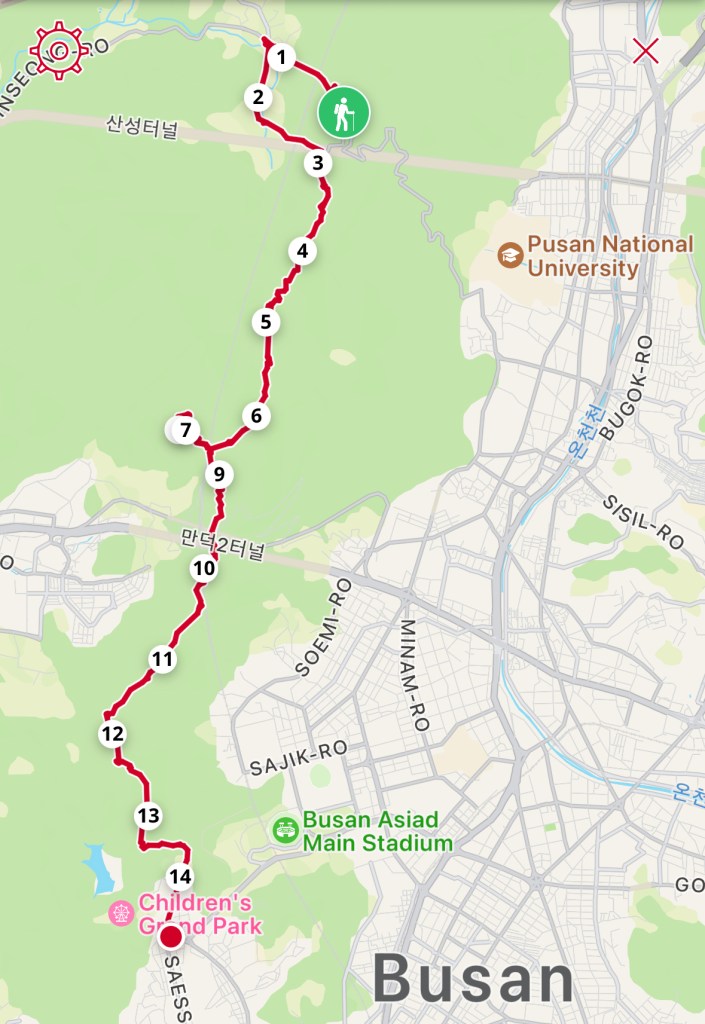
We came up with a route that neither required us to have to wake early and spend all day hiking nor would it be too easy a walk. We took a bus near Oncheonjang metro station to the East Gate of Mount Geumjeong Fortress (Geumjeong-san-seong dongmun, 금정산성 동문) which lies midway between the two temples. From there, we walked for about five hours, covering more than 14 kilometres with a fair amount of gradual climbing.
Ancient fortress, fermented wine and artisanal coffee in the mountains
Built during the Joseon dynasty between 1701 and 1703 to protect against invasions, Mount Geumjeong Fortress (Geumjeong-san-seong, 금정산성) is the largest mountain fortress in South Korea.

Within its walls lies Geumjeong-san-seong village, known for its makgeolli (unfiltered fermented rice wine). Made by a family-run brewery for centuries, Geumjeong-san-seong Makgeolli is the country’s only designated “traditional folk wine”. In Korea, it is common for people to drink this cloudy alcoholic beverage during or after their hikes.
We passed on it and instead stopped at a cafe for a snack and caffeine to ease my impending migraine before starting our hike. Even in a rustic mountain village, the coffee culture is omnipresent with several modern cafes – the Koreans really love their coffee!

Fortified, we made our way to the South Gate, following parts of the remains of the imposing fortress. Most of the path was flat with some gradual slopes. With the warming springtime weather, trees abloom with colourful flowers were abound. While some of the vegetation was still bare with bright green leaves emerging, we were mostly walking in the shade which was nice.

Every now and then, there would be an outdoor exercise station in the middle of the woods. These were like what we would have in Singapore, but with more variety and extensive including even hula hoops.

Observations of fellow hikers
Because it was a weekday, there were few hikers and most of them were older folks. The ahjummas with their permed hair were easy to spot as most of these women wore fluorescent coloured clothes and had a giant sun visor. Most of the elderly Korean men and women were in brand-name hiking technical gear complete with trekking poles, as though they were embarking on a lengthy mountain ascent! We also passed a handful of people who were walking barefoot – clearly, another trend.

As we were leaving the Mount Geumjeong Fortress South Gate (Geumjeong-san-seong nammun, 남문), an old couple started singing with gusto to the finale chorus of a Korean folk song playing from their phone. While I was amused by the merry outburst, I don’t understand why some people would listen to music aloud when walking in parks and hiking? Do they think that it is okay to disrupt the quiet? Is it because they have a different sense of space or they simply don’t care?
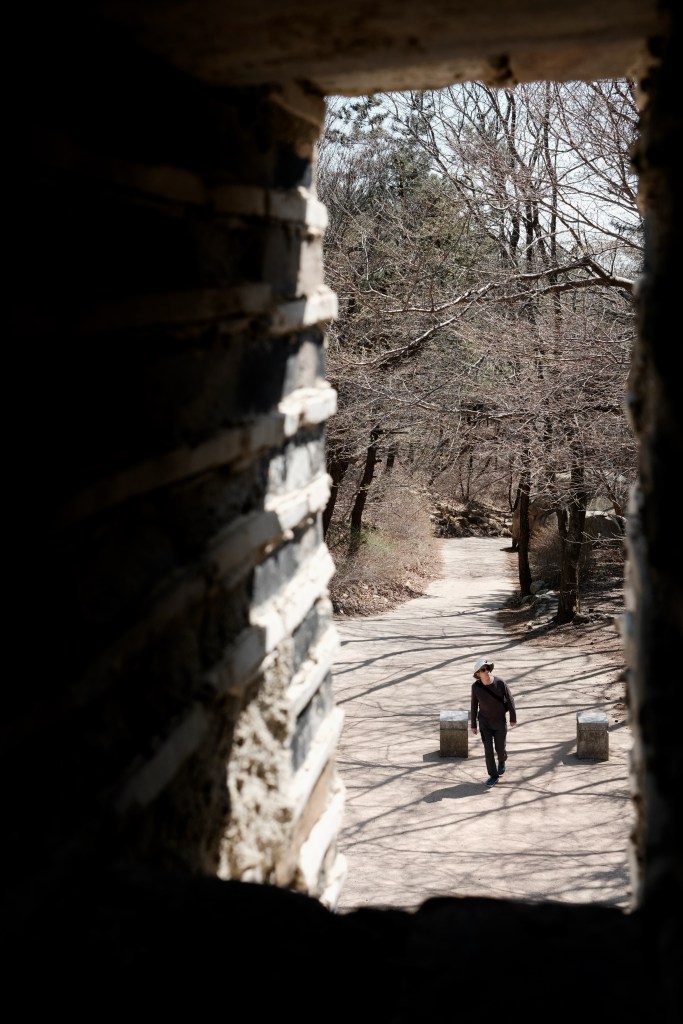
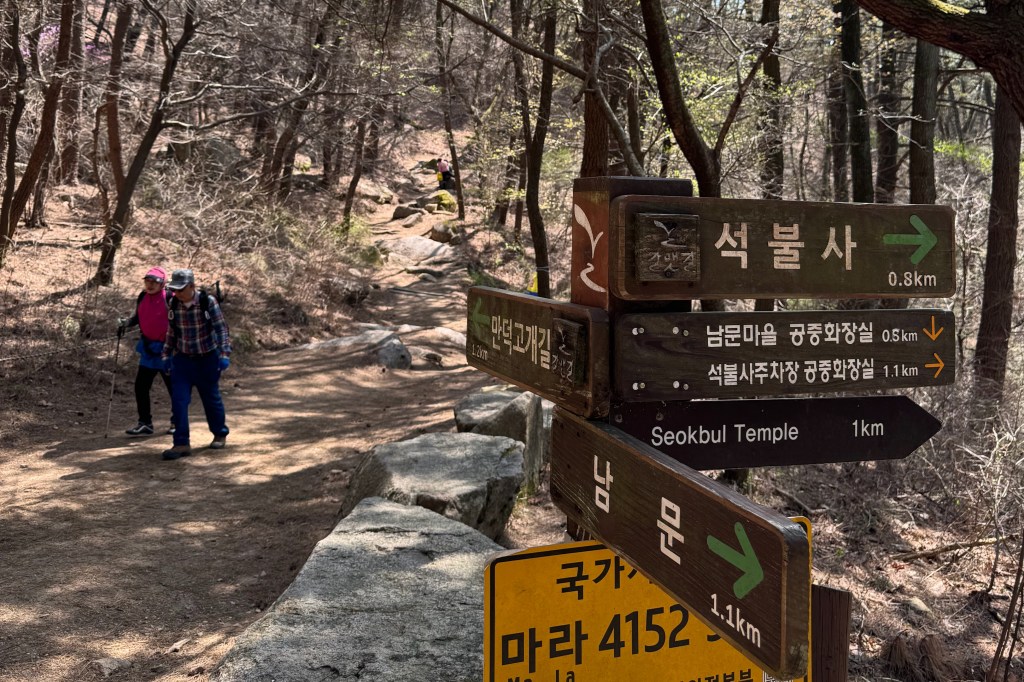
The trails were well maintained with signs guiding people to the various destinations within Mount Geumjeong. Seokbul-sa wasn’t always on the signs in the earlier part of our hike but it started appearing more after we had passed the South Gate.
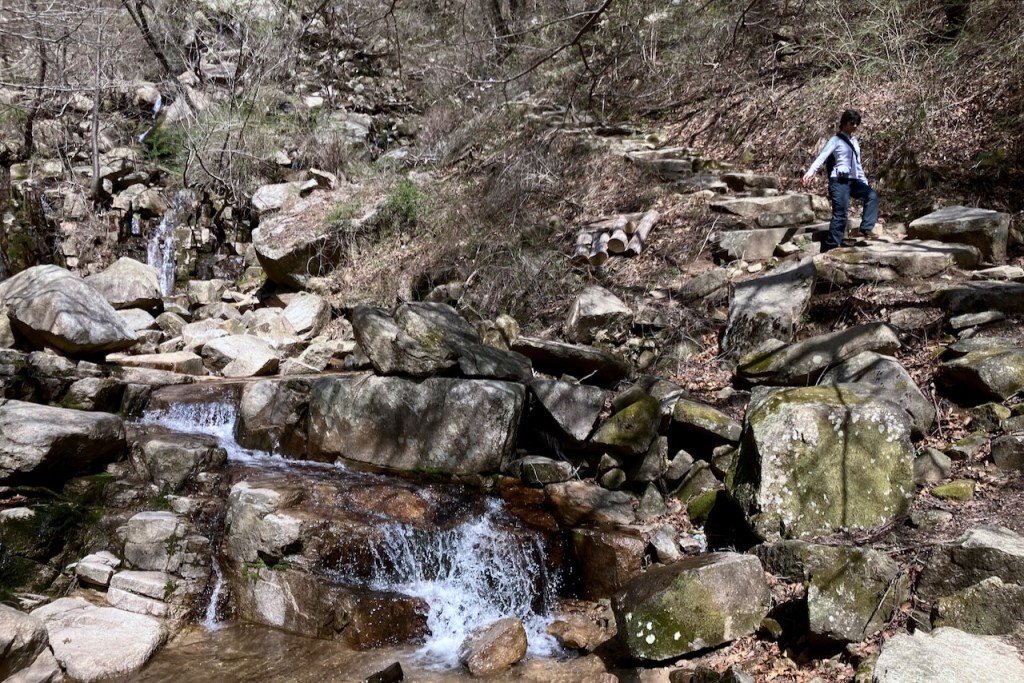
By the time we got to the winding road leading up to Seokbul-sa, I was a little tired. Walking on the asphalt path felt tedious, and we would have preferred the rugged trails through the woods. Alas, there is only one way to approach the temple with its cliff-side location. Fortunately, this lasted only around 20 minutes before we finally arrived at Seokbul-sa.
Stone Buddhas overlooking Busan
Built around 1930, the temple’s modest entrance and small buildings belie its impressive sanctum with stone reliefs.
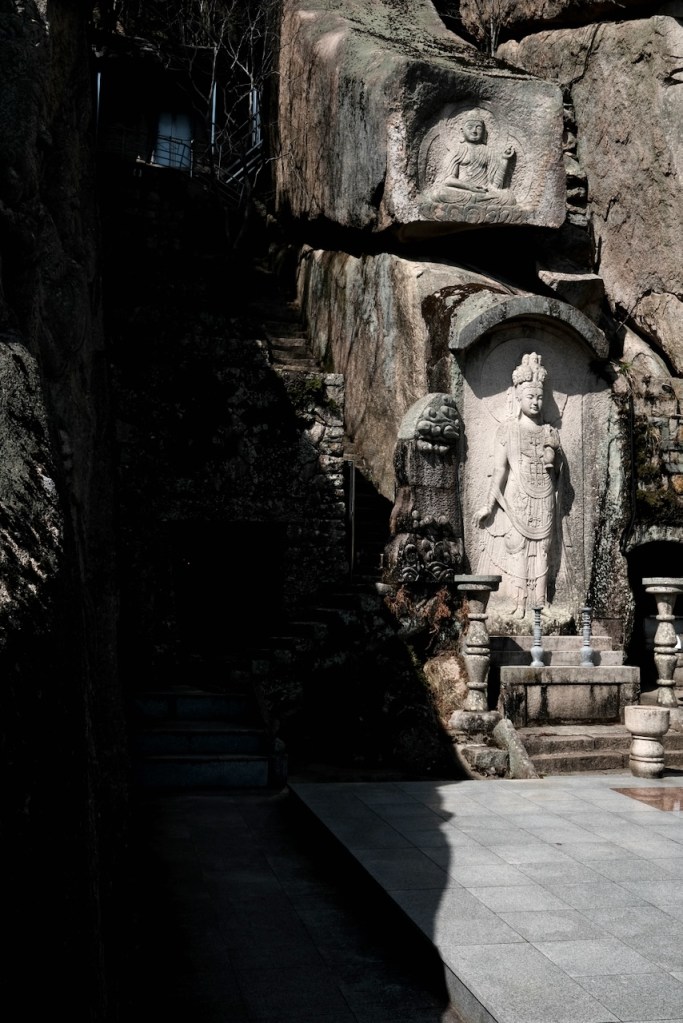
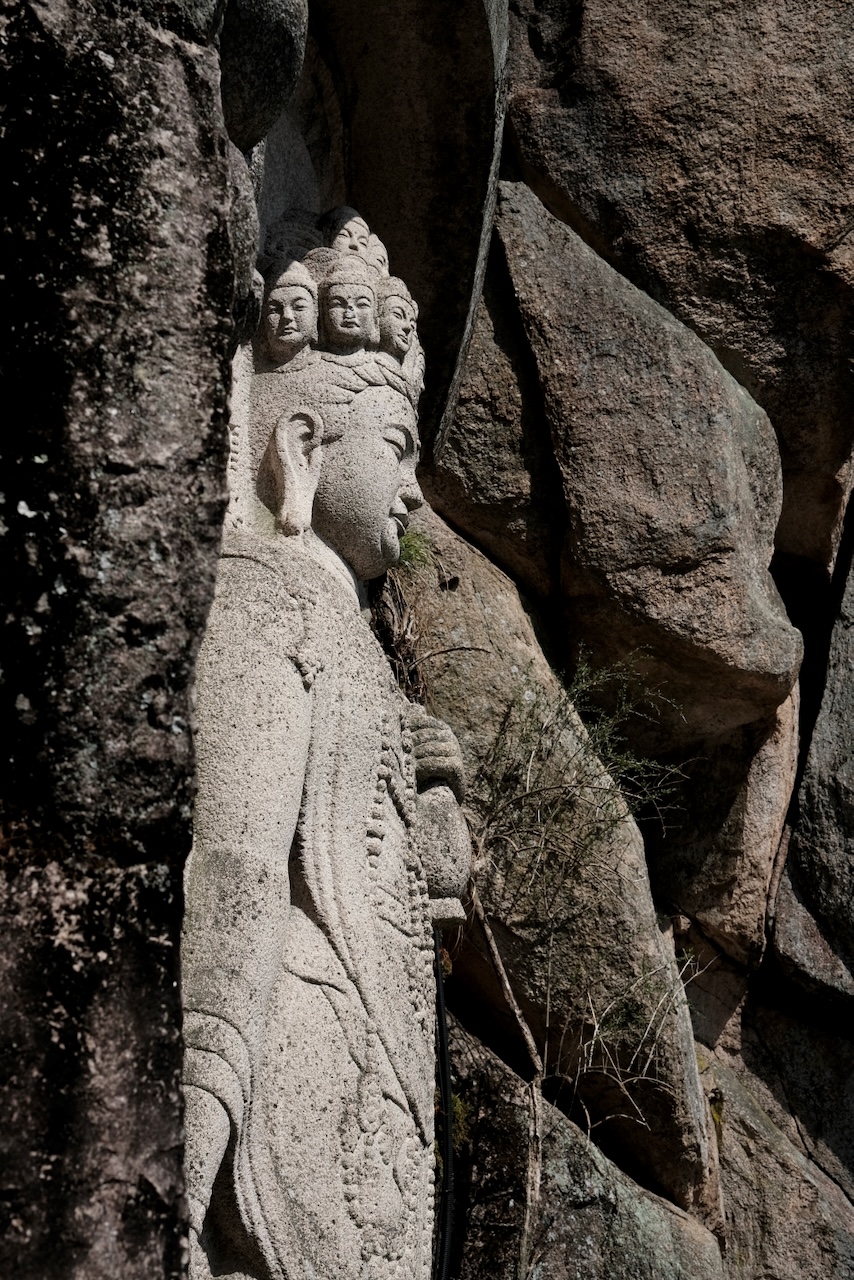
As we made our way inside, we came face to face with an elegant Avalokitesvara Bodhisattva – also known as Guanyin – carved into the central rock wall. Perched above it is a smiley Maitreya Buddha, overlooking the city of Busan.
Flanking them are other Buddhas plus arhats in an upper nook accessible via a stone stairway. Seen from this narrow staircase, Busan is framed by these stone walls, as though the buddhas were guarding the city.
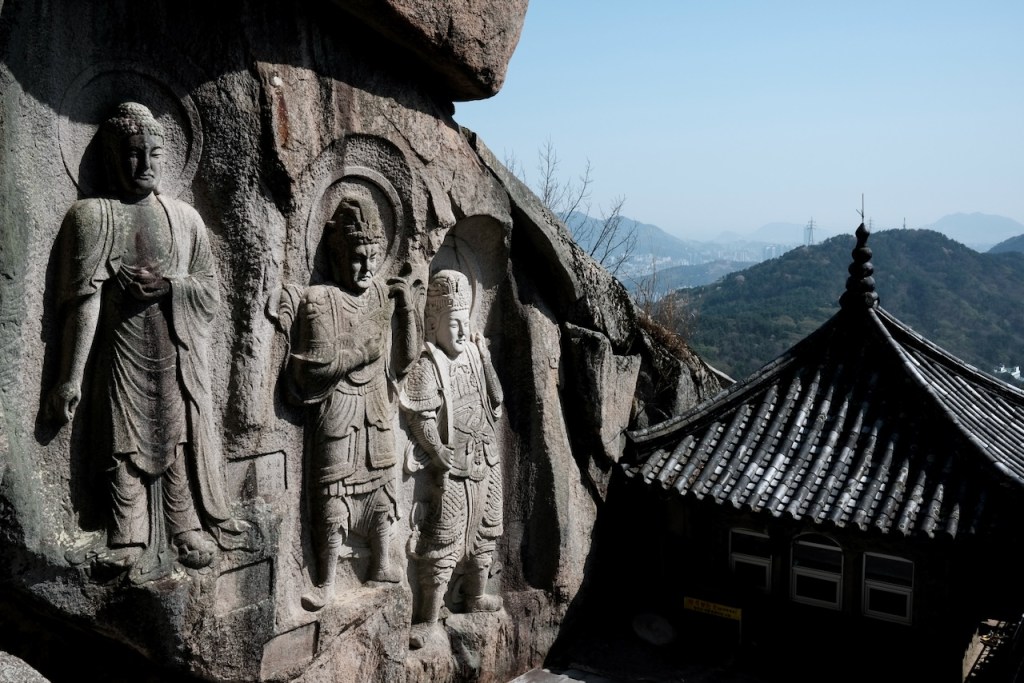

There’s something about the layout and scale of Seokbul-sa that made it feel like a refuge of sorts. At the foot and across from the 11-faced Avalokitesvara Bodhisattva is a small wooden prayer hut that I could imagine sitting in to meditate.

There were only a handful of visitors when we were there and it never felt crowded despite the intimate spaces. The peaceful atmosphere was occasionally punctuated by ravens busy breaking seeds on a rock with their beaks, their black plumage glistening in the afternoon sun.

We returned to the winding road as we left the temple on foot. Before long, we were back on unpaved trails amidst pine trees and the occasional cherry trees. As we descended the mountain, we would glimpse the dense concrete buildings looming in the horizon. It’s like another world beneath us.

It took us around two hours to reach the bottom of the mountain where we passed the Busan Children’s Grand Park. We took a bus back to our apartment in Seomyeon district where we enjoyed a hearty dinner of kimchi-jjigae after our mountain walk.

We are happy to have visited Seokbul-sa. The tranquil journey to and from the temple together with its intimate surroundings and unique design made this trek memorable.
Hike summary: From the bus stop where we alighted near the East Gate to the bus stop near the children’s park, we walked for over five hours covering more than 14 kilometres. This was a comfortable hike with mostly flat trails and gentle slopes. If you’re lucky, you may be surrounded by cherry blossoms like we were!


Join the Conversation